
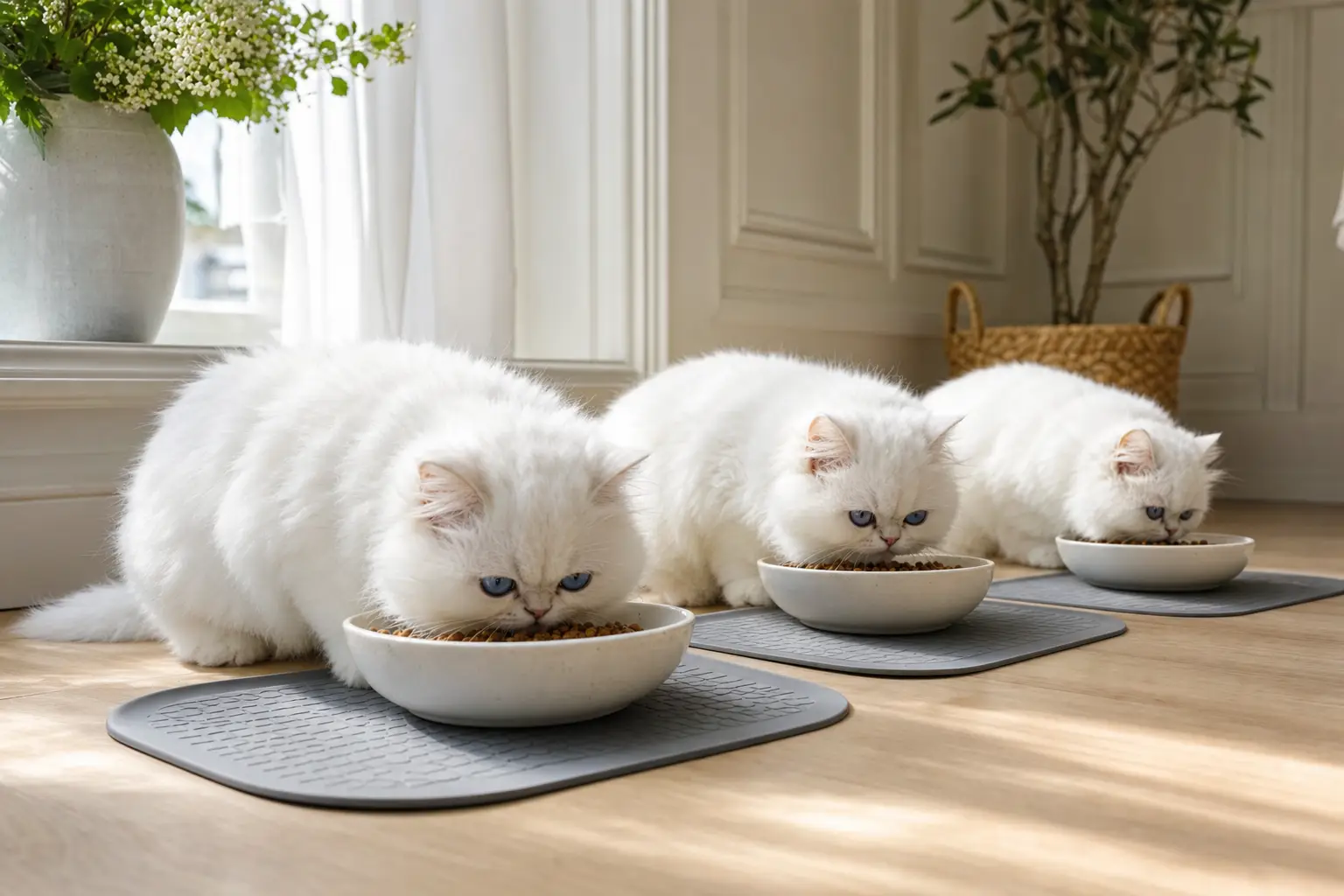
How to Create a Peaceful Multi-Cat Feeding Station for Persian Kittens
Feeding several cats peacefully is less about finding one perfect bowl and more about giving every kitten reliable access to food without feeling watched, blocked, or rushed. For Persian kittens, a thoughtful setup also considers their shorter facial structure, long coats, individual appetites, and the possibility that one kitten will eat faster than another.
The short answer: Start with one feeding place per cat, position the stations apart with visual separation, use wide shallow bowls, and serve meals on a schedule you can monitor. If a kitten steals food, guards a bowl, or seems uncomfortable eating, change the setup rather than expecting the cats to work it out.
Why can feeding become tense in a multi-cat home?
Cats may live together comfortably and still prefer privacy while eating. A confident kitten can quietly block a doorway, hover near another bowl, or finish its own meal and move on to someone else’s. The more cautious kitten may respond by eating too quickly, waiting until the room is empty, or skipping food.
These problems are easy to miss when several cats share one large dish. You may not know who ate how much, whether one kitten is being displaced, or whether a change in appetite is an early sign of illness. A separate, predictable feeding station makes both behavior and health easier to monitor.
The AAFP/ISFM Feline Environmental Needs Guidelines emphasize distributing important resources and giving cats opportunities to avoid one another. Food is one of those resources.
How many feeding stations do you need?
A useful starting point is one feeding station per cat. If your home has enough room, add an extra option for a shy kitten or for times when one station is being cleaned. The stations do not need to look identical, but each should offer a safe, comfortable place to eat.
Separate stations are more helpful than several bowls lined up together. Bowls placed shoulder to shoulder still create one crowded feeding zone, and a dominant cat can control the whole row. Instead, spread them across the room or use different parts of the home.
- Place stations far enough apart that one cat cannot easily watch or block all of them.
- Use furniture, a low visual divider, or separate rooms to reduce face-to-face pressure.
- Keep a clear exit route behind or beside each station.
- Avoid placing food beside a litter box, noisy appliance, busy hallway, or door that frequently opens.
- Keep food and water fresh, and offer more than one water location if cats crowd around a single bowl.
A corner may look convenient, but it can leave a kitten feeling trapped. A quiet location with two possible directions of retreat is usually more comfortable than a narrow nook.
What bowls work best for Persian kittens?
Choose a stable, easy-to-clean bowl that does not slide across the floor. Stainless steel or glazed ceramic are practical choices when they are washed regularly. A washable mat underneath helps protect flooring and catches crumbs from long facial hair.
Many Persian kittens do better with a wide, shallow dish rather than a deep, narrow bowl. Their facial anatomy can make it awkward to reach down into a deep container. Watch the individual kitten: if it paws at the food, backs away, drops pieces, or seems to press its face uncomfortably against the sides, try a lower, wider design.
There is no need to force every kitten to use the same style. One may prefer a flat plate, while another may eat neatly from a shallow bowl. Avoid making a bowl so broad that whiskers are constantly pressed against a hard rim, and replace chipped ceramic or damaged plastic items.
For wet food, wipe the kitten’s chin and surrounding fur gently if food collects there. Persistent dampness, redness, swelling, sores, or black spots on the chin deserve a veterinary examination rather than a simple change of bowl.
Should all the kittens eat in the same room?
That depends on their relationship and eating habits. Calm kittens that finish meals without watching or interrupting one another can eat in the same room, provided the bowls are separated. Cats that steal food, stare, growl, rush, or leave their bowls should be fed with more distance.
| What you see | Try this first |
|---|---|
| Everyone eats calmly and leaves the bowls alone | Keep separate bowls with generous space between them and continue observing. |
| One kitten watches or approaches another bowl | Add visual barriers or feed the kittens in different areas. |
| A kitten eats too quickly because another cat is nearby | Use a separate room, a closed baby gate with supervision, or a microchip feeder. |
| Cats need different food or medication | Feed behind a closed door and remove leftovers before reuniting them. |
A closed door is not a punishment. It is a simple way to guarantee access. Keep the feeding area pleasant, and reunite the kittens after meals when everyone is settled.
How can you stop one kitten from stealing food?
First, make sure each kitten is receiving an appropriate amount. A hungry kitten may be seeking more food, while another may simply be eating quickly out of habit. Portion sizes should be based on the food label, growth stage, body condition, and veterinary guidance rather than on how much a housemate consumes.
Scheduled meals are often easier to manage than leaving a shared bowl down all day. They let you see who is eating, make food stealing easier to interrupt, and reveal appetite changes sooner. Young kittens commonly need several small meals, but the ideal schedule depends on age, health, food type, and your veterinarian’s advice.
If supervision is difficult, a microchip-activated feeder can open only for the registered cat. Introduce it gradually: leave it open at first, place familiar food nearby, and let the kitten investigate without pressure. A feeder that works mechanically but frightens a kitten is not a successful solution.
Do not chase or scold a food-stealing kitten. Calmly block access, guide each cat to its own station, and improve the physical layout. Punishment can make mealtimes more tense without teaching the cat where it should eat.
What if the kittens need different diets?
Growing kittens should receive a complete and balanced food formulated for growth or for all life stages, as identified on the product label. An adult cat’s food, a prescription diet, treats, or supplements may not be suitable for every kitten. If cats in the household have different nutritional needs, separate feeding is safer than hoping each animal chooses the right bowl.
When changing food, transition gradually unless your veterinarian directs otherwise. Mix increasing amounts of the new food with the familiar food over several days, and slow down if a kitten develops digestive upset or refuses meals. A sudden food refusal in a young kitten deserves prompt veterinary advice.
For individualized portions, ask your veterinarian to assess body condition and growth. Persian kittens can vary considerably in size and activity, so a package feeding chart is a starting point, not a substitute for monitoring the actual kitten.
How do you introduce a new feeding station?
Change one thing at a time when possible. Moving the bowls, changing the food, adding a feeder, and separating the cats all at once makes it difficult to know what caused a problem.
- Put the new bowl or feeder beside the familiar one.
- Let the kitten inspect it before expecting it to eat from it.
- Place a small amount of familiar food in the new dish.
- Keep the station in a quiet, predictable location.
- Once the kitten uses it comfortably, remove or relocate the old setup.
For a new home, begin with a quiet room containing food, water, a litter box, bedding, and hiding choices. Gradually expand access as the kitten becomes comfortable. In a home with resident cats, introductions should also be gradual; feeding can be one of the first positive routines, but it should not force cats to eat close together.
What signs show that the setup needs improvement?
Watch the whole meal, not just whether the bowl is empty. Warning signs include a kitten waiting until another cat leaves, repeatedly looking over its shoulder, eating frantically, blocking access, leaving food untouched, or gaining or losing weight unexpectedly.
Also watch for repeated vomiting, diarrhea, difficulty chewing, excessive drooling, lethargy, or pain around the mouth. A feeding station cannot solve a medical problem. Contact your veterinarian promptly if a kitten’s appetite changes, especially if it is very young, has another illness, or stops eating.
Clean bowls regularly and follow the food manufacturer’s storage instructions. Unused wet food should be handled and refrigerated promptly according to the label. The U.S. Food and Drug Administration’s pet food safety guidance provides additional advice on storage and hygiene.
Frequently asked questions
Can two Persian kittens share one bowl?
They can, but sharing is not the best default. Separate bowls let you monitor intake and reduce competition, even when the kittens appear friendly. If they share peacefully now, keep observing as they grow and their appetites change.
Is free-feeding a good idea?
Free-feeding may work for some cats, but it makes portion control and appetite monitoring harder in a multi-cat home. Scheduled meals are usually more practical when kittens steal food, need different diets, or are still growing.
Should I use an elevated bowl?
Not automatically. A stable, shallow bowl at a comfortable height is usually a reasonable starting point. Choose based on the kitten’s posture and ease of eating, and ask your veterinarian before changing feeding height for a cat with a medical condition.
A simple peaceful-feeding checklist
- One comfortable feeding place for each cat.
- Stations separated by distance or visual barriers.
- Wide, shallow, stable bowls for kittens that struggle with deep dishes.
- A clear escape route and a quiet location.
- Scheduled meals when monitoring or portion control matters.
- Separate rooms or microchip feeders for food theft or different diets.
- Regular observation of appetite, weight, behavior, and stool.
The best multi-cat feeding station is the one that lets every kitten eat at its own pace without being watched, rushed, or displaced. Make the arrangement flexible: as Persian kittens grow, their food needs, confidence, and relationships may change.
For more guidance on welcoming and caring for Persian kittens, explore CTkittens.com.

Rachel Cohen is a journalist and producer with a passion for audio storytelling, health and science reporting, and feline companions.
A graduate of Middlebury College, Rachel spends her weekends exploring the mountains and when she isn’t outdoors or chasing a story, she can usually be found hanging out with her cats.
Lowkey the clear exit route tip is huge, cause my shy cat wasn’t picky at all, she just hated getting cornered by the lil food thief lol.