
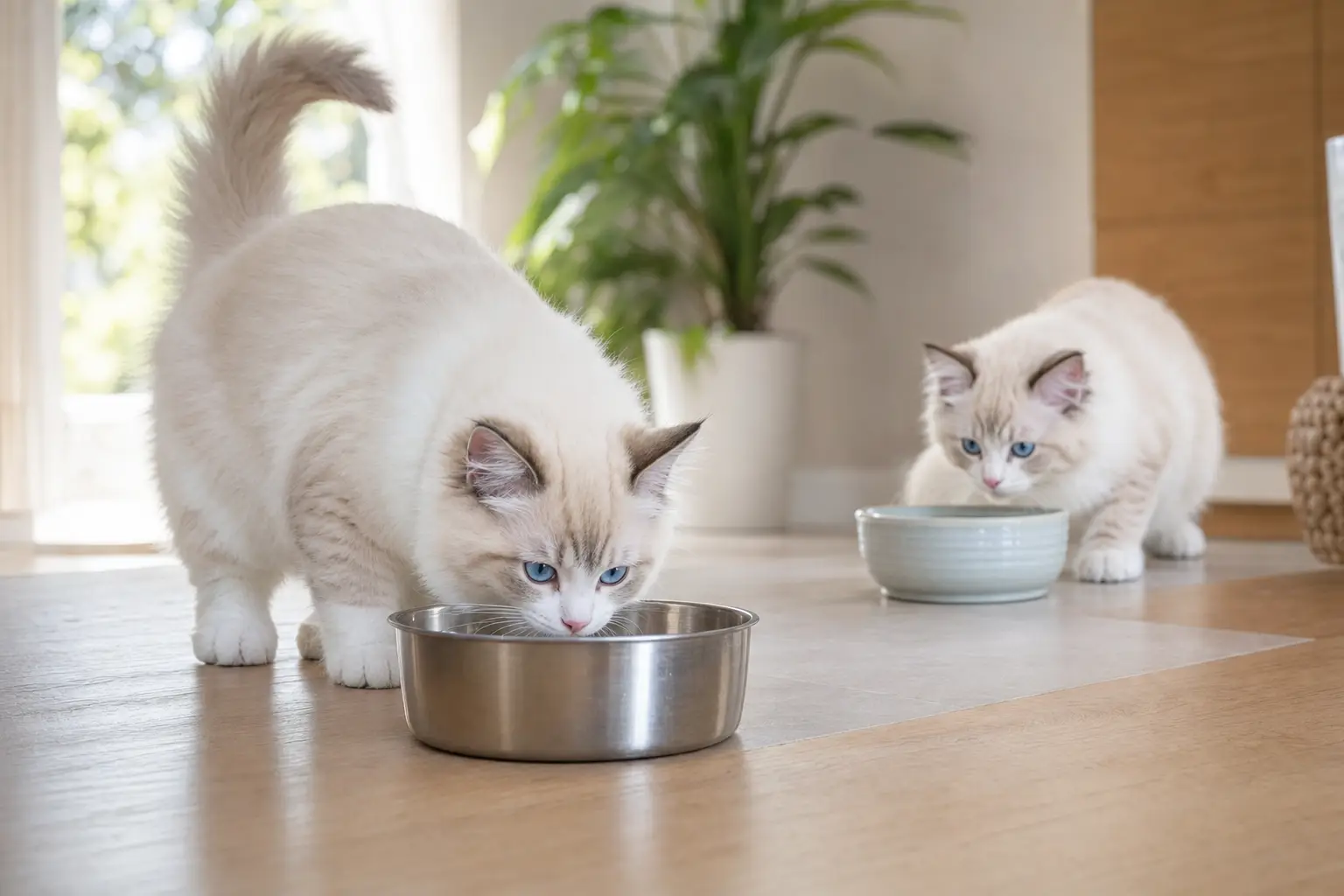
Ragdoll Kittens: 10 Gentle Upgrades to Find the Best Water Bowl for Two Cats
Choosing the best water bowl for two cats is less about finding a breed-specific product and more about making water easy, quiet, clean, and comfortable to access. Ragdoll kittens do not automatically need a special bowl, but their larger frames, soft coats, and individual preferences can make some designs more practical than others.
For most two-cat homes, begin with two stable, wide bowls made from stainless steel or good-quality glazed ceramic. Place them in separate, peaceful locations rather than asking both kittens to share one crowded station. Then observe what each cat actually prefers. A fountain, raised bowl, or different material may be a useful upgrade, but none is universally better.
The quick answer: what to try first
A wide, shallow, non-porous bowl with a nonslip base is the most sensible starting point. Choose a size that lets each kitten drink without pressing its cheeks against the rim, and avoid lightweight dishes that slide across the floor. Offer at least two water stations so one cat cannot accidentally block the other.
Fresh water, clean bowls, and good placement usually matter more than appearance. Cats can be particular about noise, location, water level, and the smell left behind by detergent or stale food. The winning setup is the one both cats use calmly and consistently.
Compare the main water-bowl styles
| Style | May suit | Watch for |
|---|---|---|
| Wide stainless steel | A practical everyday choice; easy to inspect and clean | Sliding if the base is too light |
| Glazed ceramic | Homes wanting a heavier, stable bowl | Chips, cracks, or poorly made glaze |
| Drinking fountain | Cats interested in moving water | Pump noise, filter upkeep, and hidden residue |
| Raised bowl | A cat that seems more comfortable with a slightly higher surface | Height is not automatically better |
| Collapsible silicone | Travel or temporary use | Can tip or hold odors if not dried properly |
Ten gentle upgrades for a two-cat household
1. Start with a wide, shallow opening
A broad bowl gives a kitten room to approach and drink without rubbing its face along a narrow rim. This is especially sensible for a growing Ragdoll, whose head and body will become larger than those of many other domestic cats. The bowl does not need to be flat; it simply should not feel like a deep cup.
The term “whisker fatigue” is often used to explain bowl avoidance, but it should not be treated as a diagnosis. You do not need to settle that debate to make a helpful choice: if a cat avoids a narrow dish, test a wider one and watch the response.
2. Upgrade to a stable, nonslip base
Water that sloshes across the floor can make drinking unpleasant and create a mess around long fur. Look for a heavy base, rubber ring, or mat that keeps the dish in place. A wide footprint is often more useful than a tall bowl, particularly for playful kittens that investigate everything with their paws.
3. Favor stainless steel or sound glazed ceramic
Stainless steel is durable, easy to inspect, and usually simple to wash. Glazed ceramic can also work well when it is made for food use and remains smooth and intact. Avoid bowls with chips, cracks, peeling surfaces, or hard-to-clean seams. Plastic may be convenient, but scratched or worn plastic is less appealing as a long-term everyday option because residue can collect in damaged surfaces.
4. Give each cat a reliable water station
One shared bowl can be enough in a very relaxed pair, but it leaves no alternative if one cat guards the area, startles easily, or prefers drinking privately. Set up two stations in separate parts of the home. They do not need to be identical. One cat may prefer ceramic in the kitchen while the other chooses stainless steel in a quiet room.
Look for subtle access problems: one kitten waiting until the other leaves, blocking the bowl, or approaching and backing away. Separate stations are a simple way to reduce that pressure without assuming the cats are fighting.
5. Move water away from busy traffic
A bowl beside a noisy appliance, frequently opening door, or busy walkway may be ignored even when the water is fresh. Choose a calm location where each kitten can see its surroundings while drinking. Keep water away from litter boxes, and test whether your cats prefer it slightly separated from food too. Feline preferences vary, so observation is more useful than a rigid placement rule.
6. Test a fountain without treating it as a cure-all
Some cats show more interest in moving water, making a fountain worth trying. Choose a model with a quiet pump, a broad drinking area, and parts that can be fully disassembled for cleaning. Put it beside, not instead of, a regular bowl during the trial.
A fountain is not automatically cleaner. Filters need replacement, pumps collect residue, and a fountain that is too loud may discourage a cautious kitten. If both cats avoid it, return to still water rather than forcing the upgrade.
7. Try a small height change only if it helps
A slightly raised bowl can be comfortable for some larger cats or for a cat that seems reluctant to bend. There is no need to choose a tall feeder simply because the cat is a Ragdoll. Begin with a modest lift that remains stable, and stop if the bowl wobbles or changes the cat’s posture in an awkward way.
8. Keep the water level inviting
Some cats dislike a nearly empty bowl, while others prefer a lower level that leaves plenty of room around their face. Refill to a consistent level and notice whether either kitten drinks more readily after a change. A broad bowl also makes it easier to see floating hair, food crumbs, or dust before they become part of the drinking experience.
9. Make cleaning easy enough to maintain
Rinse and refill water every day, and wash bowls regularly with hot water and unscented dish soap. If the surface feels slimy, looks dirty, or has collected food, clean it immediately. Ragdolls’ longer coats can leave hair in water, so a quick visual check at each refill is worthwhile.
Wash fountain parts according to the manufacturer’s instructions, including the pump and areas beneath the filter. A filter does not remove the need for routine cleaning. Rinse thoroughly so strong detergent smells do not become a new reason to avoid the bowl.
10. Let the kittens choose through a calm trial
Change one feature at a time: material, shape, location, or moving versus still water. Offering several unfamiliar bowls at once makes it hard to know what helped. Keep the old, accepted option available while testing a new one, and never withhold water to make a kitten use a particular design.
For a simple seven-day comparison, record which station each cat visits, whether the water stays clean, and whether either kitten waits, paws, spills, or walks away. The favorite may not be the bowl humans find most attractive. It is the one that is used comfortably and remains practical to keep clean.
Water habits can offer useful health clues
A cat’s water intake depends on factors such as diet, weather, activity, and health. Cats eating wet food may drink less from a bowl because they receive more moisture from meals; that does not make a clean water supply unnecessary.
Pay attention to a sudden or persistent change rather than trying to judge hydration from one missed drink. Increased drinking, repeated urination, vomiting, diarrhea, unusual tiredness, or a marked loss of interest in water deserves veterinary advice. Straining to urinate or producing little or no urine is urgent, particularly in male cats. Cats with kidney, urinary, or other medical conditions may need an individualized feeding and hydration plan from a veterinarian.
Frequently asked questions
Do Ragdoll kittens need a special water bowl?
No. Their breed does not require a particular material or shape. A wide, stable, easy-to-clean bowl is a sensible starting point, with adjustments based on each kitten’s behavior and growth.
Should two cats share one water bowl?
They can, if both cats use it comfortably and there is no guarding or crowding. Two water stations are a better default because they provide choice and keep one cat from controlling access.
Are water fountains better than bowls?
Not automatically. A fountain may interest a cat that likes moving water, but it can be noisy and requires careful cleaning. Offer both styles during a trial and keep the option your cats actually use.
Where should a cat’s water bowl go?
Choose a quiet, easy-to-reach location away from litter boxes and disruptive household traffic. If your cats repeatedly avoid water beside their food, try a separate location and compare their response.
Sources and further reading
For general feline hydration information, see the Cornell Feline Health Center’s guidance on water. For the role of separated, predictable resources in a cat-friendly home, consult the AAFP and ISFM Feline Environmental Needs Guidelines.
Ready to prepare a welcoming home for your kittens? Explore more practical Ragdoll care guidance at CTkittens.com.

Rachel Cohen is a journalist and producer with a passion for audio storytelling, health and science reporting, and feline companions.
A graduate of Middlebury College, Rachel spends her weekends exploring the mountains and when she isn’t outdoors or chasing a story, she can usually be found hanging out with her cats.


That seven-day bowl log is lowkey genius, cause otherwise I’d just buy a fancy fountain and assume the cats was being dramatic.
Lowkey the one-change-at-a-time test is smart as hell, otherwise you’re just buying fancy bowls while both cats still drink from the random mug by the sink lol.
Watching whether one kitten hangs back till the other leaves is such a sneaky useful clue, I legit would’ve assumed they was just not thirsty lol.