
The Household Sound Map: A Ragdoll Kitten’s Daily Audio Adventure
A washing machine begins its slow spin. A cupboard clicks shut. Someone rolls a desk chair across the floor.
To people, these are background noises. To a Ragdoll kitten, they can form a changing map of the home: quiet here, interesting there, temporarily mysterious beside the kitchen island.
That makes sound an overlooked form of enrichment. Instead of adding another toy, you can observe how your kitten responds to the household’s existing soundtrack and gently arrange the environment around those observations.
What Is a Household Sound Map?
A Household Sound Map is a simple record of where sounds happen, when they happen, and what your Ragdoll kitten chooses to do afterward. The goal is not to test bravery or create startling experiences. It is to notice patterns in ordinary life.
For three or four days, keep a small note on your phone. When a noticeable sound occurs, record four details:
- The sound: keys, a kettle, a printer, rain against glass, footsteps, or a vacuum in another room.
- The location: kitchen, hallway, office, bedroom, or near a window.
- Your kitten’s response: watches, approaches, pauses, hides, stretches, follows you, or ignores it.
- The follow-up: whether your kitten returned to the area after the sound ended.
A Ragdoll kitten may not react dramatically. One might simply lift its head from a cushion, track the noise with its ears, and continue sleeping. That quiet pause is still information.
The Three-Second Listening Pause
Try a small observation game called the Three-Second Listening Pause. When a normal household sound occurs, stop what you are doing for three seconds and watch your kitten before calling, petting, or directing attention elsewhere.
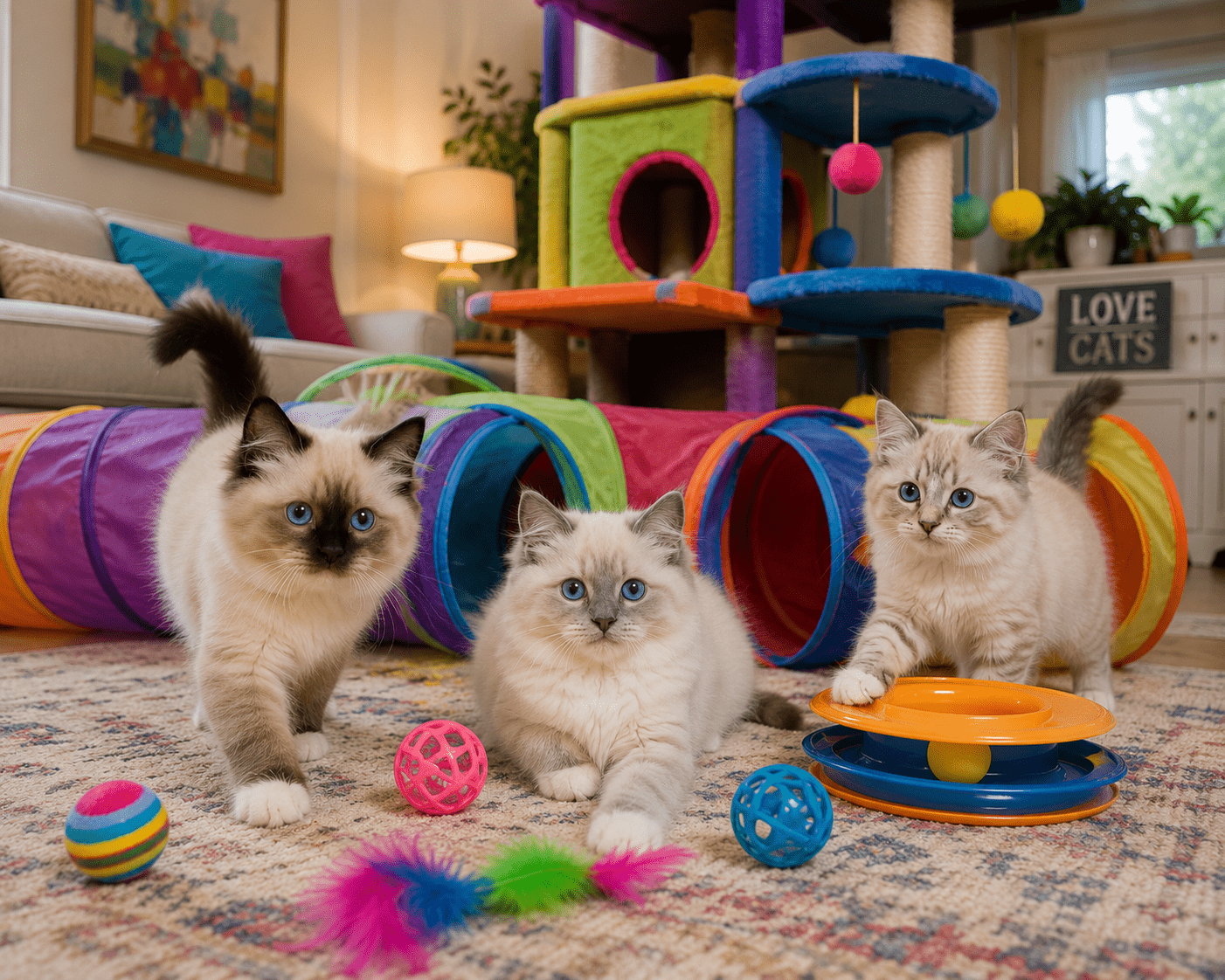
Imagine a blue-point Ragdoll kitten resting beneath a side table while you open a drawer. Its head rises. One ear turns toward the kitchen. It does not retreat; instead, it waits until the drawer closes, then walks out to inspect the table leg.
The interesting moment is not the sound itself. It is the decision afterward.
Does your kitten investigate from a distance? Follow the person who made the noise? Choose a higher perch? Move toward a familiar blanket? These choices show how the kitten manages novelty in that particular setting.
Keep the exercise natural. Do not clap, bang objects, or repeat a sound to provoke a reaction. The household already supplies plenty of gentle variety.
Turn Notes into a Sound Landscape
After several days, divide your home into three informal sound zones. These are not permanent labels; they are design clues.
1. The Listening Zone
This is where your kitten tends to pause and observe. It might be the edge of a living-room rug, a doorway, or the space beneath your desk.
Place a comfortable resting surface nearby, such as a washable mat or familiar blanket. The point is to give your kitten a secure observation post, not to force interaction with the sound.
2. The Follow Zone
Here, your kitten tends to move toward activity. A Ragdoll may trail behind you when you carry laundry, prepare a snack, or open a closet. Keep walkways clear and offer a low, stable place where the kitten can watch without becoming part of the traffic.
This zone can become a miniature “household theater.” Your kitten gets to observe movement, doors, fabrics, and human routines from a predictable location.
3. The Recovery Zone
This is a quieter area your kitten chooses after a busy sound or burst of movement. It may be a bedroom corner, a carrier left open, or the shadow beneath a chair.
Leave this retreat undisturbed. A recovery zone is useful because it gives your kitten control over distance. If the vacuum starts or several visitors arrive, the kitten can choose to step away rather than being carried into the middle of activity.
Use Sound to Design Tiny Adventures
Once you understand your kitten’s sound zones, create a short indoor route that connects observation points. Call it the Quiet-to-Curious Circuit.
Begin with a calm resting place. From there, arrange two or three safe stopping points: a folded blanket beside a doorway, a cardboard box with its flaps trimmed or secured, and a clear view into a room where you are doing a quiet task.
Do not place the stations in a straight line like an obstacle course. A gentle curve works better because it lets the kitten choose whether to continue. Keep the route away from hot appliances, unstable furniture, dangling cords, and frequently opened doors.
One afternoon, you might notice your Ragdoll ignoring the box entirely. Instead, it walks to the threshold, listens to the dishwasher, and settles beside the cabinet. That is not a failed enrichment setup. The real discovery is that the sound of a machine may be more compelling than a new object when the kitten can approach at its own pace.
Three Useful Patterns to Watch
Sound plus location
Your kitten may respond differently to the same noise in different rooms. A printer in the office may be familiar, while a similar mechanical sound from the hallway feels less predictable. Location can matter as much as volume.
Sound plus human movement
A door closing may mean very little when you remain seated, but become interesting when it is followed by your footsteps. Watch whether your kitten reacts to the noise, the person, or the sequence of both.
Sound followed by silence
Some kittens investigate only after the house becomes quiet again. If your kitten waits beneath a chair during a busy moment and emerges afterward, you have learned that delayed exploration is part of its style.
These observations can help you arrange furniture and routines more thoughtfully. You might leave a clear path from a quiet retreat to the living room, avoid placing a nap blanket beside a frequently slamming door, or position a perch where your kitten can watch without blocking a walkway.
Persian vs. Ragdoll: Different Sound-Map Styles
A Ragdoll kitten may be inclined to include human movement in the map, following a familiar person from one sound zone to another. A Persian kitten may show stronger interest in the quality of the setting itself: a calm corner, a soft surface, or a predictable room with limited commotion.
Neither pattern is a rule. Some Persians investigate every cupboard opening, while some Ragdolls prefer to observe from a fixed cushion. The useful comparison is practical: offer a Ragdoll multiple low-pressure routes toward household activity, while giving a Persian especially appealing quiet observation spots. For either breed, choice matters more than encouraging a particular reaction.
How to Keep the Sound Map Comfortable
Normal household variety can be enriching, but intentional loudness is unnecessary. Keep unfamiliar sounds brief and distant, and allow your kitten to move away. Do not block a retreat, pull a hiding kitten into view, or use treats to lure it toward a noise it is avoiding.
During repairs, parties, or unusually busy days, simplify the map instead of expanding it. Close off unsafe work areas, preserve access to a calm room, and keep familiar bedding available. The best sound enrichment is not a dramatic event. It is a home where your kitten can listen, decide, and return when ready.
Start Your Own Sound Map
Choose one ordinary day and listen from your kitten’s height. Which sounds announce your movement? Which rooms become interesting after sunset? Where does your kitten go when the home suddenly becomes busy?
By the end of the week, you may discover that your Ragdoll has a favorite “broadcasting station” beside the bookcase or that the hallway is explored only after the last footsteps fade. Those small preferences turn a familiar home into a more legible, engaging place.
For more thoughtful ideas about living with Persian and Ragdoll kittens, explore the guides and kitten resources at CTkittens.com.

Rachel Cohen is a journalist and producer with a passion for audio storytelling, health and science reporting, and feline companions.
A graduate of Middlebury College, Rachel spends her weekends exploring the mountains and when she isn’t outdoors or chasing a story, she can usually be found hanging out with her cats.