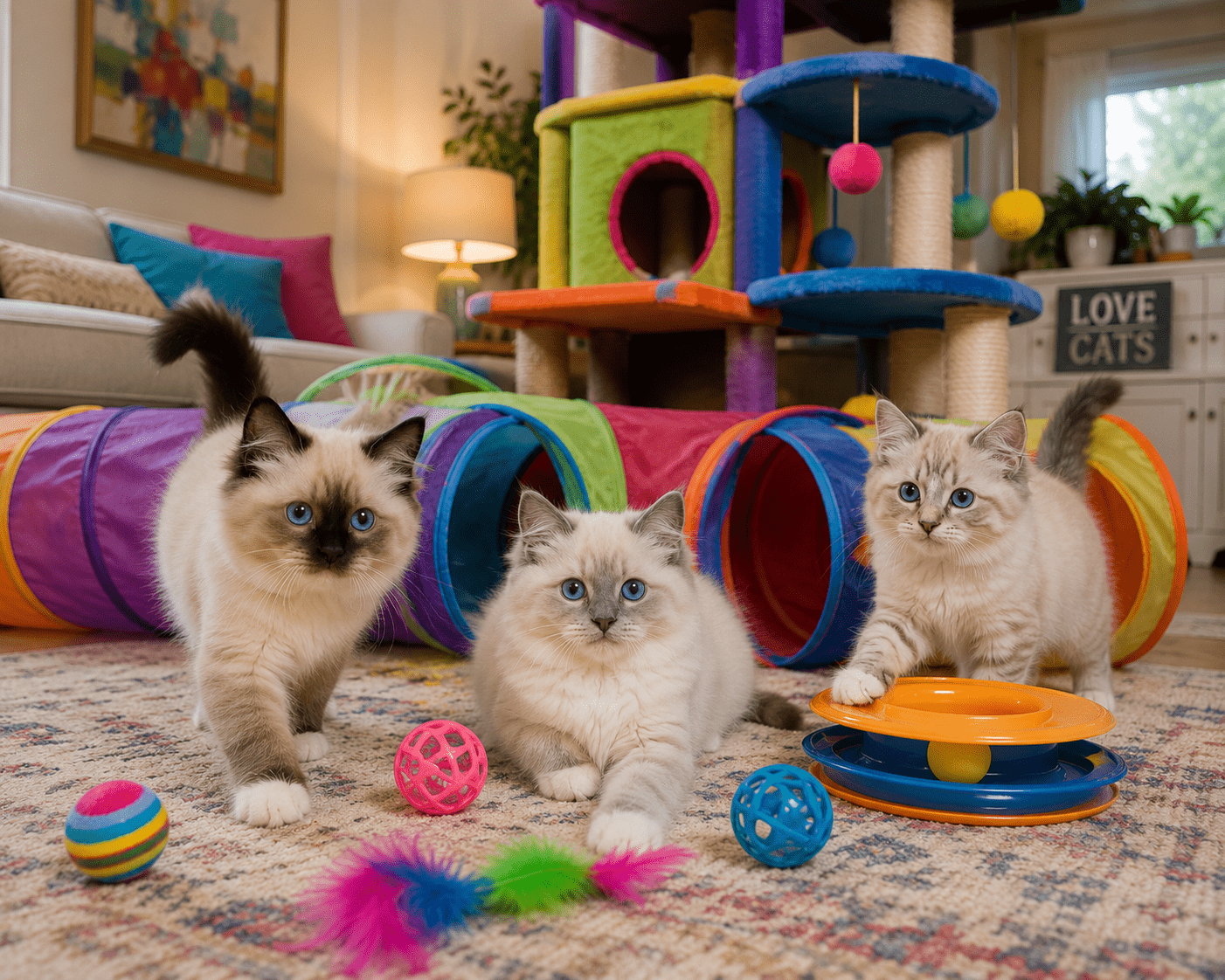

Why Your Ragdoll Kitten Looks Different on Rainy Days
On a rainy day, your Ragdoll kitten may seem to have changed overnight. The coat can look flatter or darker, the pale body may take on a gray cast, and the blue eyes can appear especially vivid. Sometimes the kitten even seems less fluffy when resting in the same familiar place.
Usually, the change is not in the kitten at all. It is the result of overcast light, indoor shadows, coat position, and the background surrounding the cat. These details are easy to overlook because people tend to judge a coat by color first. With a Ragdoll, the way light meets a pointed, semi-long coat makes the visual effect particularly noticeable.
Rainy light reveals a different side of a Ragdoll coat
Sunlight creates strong highlights and clear shadows. Cloud cover does the opposite: it spreads light evenly through the room and reduces contrast. Cream, ivory, and pale areas may look cooler or duller, while the darker face, ears, legs, and tail can appear more pronounced.
Warm household bulbs add another layer. A Ragdoll kitten sitting near a window may look softly silver in daylight, then more golden or beige when the room’s lamp is switched on. Neither view is necessarily the “true” color. Both are honest impressions created by different light sources.
Because Ragdolls are color-pointed, the contrast between their lighter body and darker extremities gives the eye more information to interpret. On an overcast afternoon, a seal, blue, chocolate, or lilac point may appear less sharply outlined than it does in direct morning light. This is one reason a single photograph—or one rainy afternoon—cannot tell you much about the exact appearance of a growing kitten.
The overlooked role of posture and coat direction
People often say a Ragdoll kitten looks “less fluffy” on a damp day, but the kitten’s position may matter more than the weather. After a long nap, the hairs along the shoulders and sides can lie in different directions. When the kitten sits upright, the neck ruff may lift. When it curls into a tight resting position, the same coat can look shorter and more compact.
Watch what happens when your kitten changes position rather than assuming the coat itself has changed. Three small observations are especially useful:
- Side lighting shows texture: Diffuse light from a rainy window can reveal fine layers along the chest and flank that disappear under a ceiling light.
- Resting posture changes the silhouette: A curled kitten may look darker and smaller because more of the pale body is tucked away, leaving the pointed areas visible.
- The background affects perceived color: A white bed can make a pale coat look creamier, while a charcoal or navy surface may make the same coat appear brighter and cooler.
- Face markings draw attention first: When the body is evenly lit, the ears and mask may look more prominent simply because they provide the strongest contrast.
These clues help explain why your Ragdoll kitten’s coat appearance can seem to change from one hour to the next without any real change in coloring.
Arrange the room for clearer observation, not a staged picture
If you want to understand your kitten’s natural appearance, the best home arrangement is usually a familiar resting place with gentle, indirect light. A bed or low perch positioned a short distance from a bright window can provide enough illumination without requiring the kitten to sit directly in a draft or glare.
A matte, mid-tone surface is more informative than a brilliant white blanket or a glossy patterned cushion. Soft gray, muted blue, taupe, or natural oatmeal shades create enough contrast to show the pale body without reflecting color onto the coat. This is useful for observation and casual photographs, but the kitten should remain free to leave the area.
Try standing in different places in the room before moving the bed. Light from the side often shows coat texture better than light directly above. Looking from the kitten’s level can also reveal how the chest, cheek ruff, and tail change shape as the animal shifts from curled to upright.
There is no need to repeatedly reposition a Ragdoll kitten for a better view. One of the most useful lessons is that appearance is connected to comfort. A relaxed kitten with a loose body and naturally settled coat tells you more than a kitten being held, turned, or encouraged to sit in a particular pose.
What rainy-day behavior may be telling you
A rainy day can also change the way you notice your kitten. The household may be quieter, the windows may be dimmer, and people may spend more time in one room. That gives you more opportunities to see small transitions: a kitten watching moving water on the glass, choosing a warmer fabric, or remaining curled for longer before beginning a play session.
It is tempting to conclude that the weather has directly changed your Ragdoll’s personality. A more careful interpretation is often better. The kitten may simply be responding to the household’s altered rhythm. If you work from home on wet days, for example, your Ragdoll may appear unusually companionable because you are available to observe behavior that normally happens while you are away.
Notice whether the preference repeats in different conditions. Does your kitten choose the same location when the room is sunny? Does the coat look different only when the body is curled? Does the kitten approach you more often because the family is spending more time indoors? Comparing these details prevents one unusual afternoon from becoming a permanent personality label.
Persian versus Ragdoll kittens in rainy indoor light
Persian and Ragdoll kittens can both look dramatically different under cloudy indoor lighting, but for different visual reasons. A Persian’s dense, long coat often creates a fuller outline around the body, face, and chest, so side light may emphasize volume and layered texture. Individual Persians vary greatly in face shape and coat density.
A Ragdoll’s semi-long coat commonly falls in a softer, more flowing way, and its color-point pattern makes the relationship between pale body and darker extremities especially important. On a rainy day, the Ragdoll’s blue eyes and facial points may stand out while the body looks less warm. A Persian may appear more like a textured silhouette, while a Ragdoll may show more noticeable changes in contrast as it moves through the room. In both breeds, posture, background, and household lighting can matter as much as the coat itself.
Which changes are normal to expect?
Some visual changes are simply temporary: a flattened ruff after sleep, a different impression under warm bulbs, or a darker-looking face against a pale wall. A young Ragdoll’s coloring can also develop gradually as the kitten matures, so comparisons are most useful when made over weeks or months rather than between two rainy-day photographs.
For a more reliable impression, observe your kitten in the same familiar room at different times, while allowing natural movement. Look at the entire cat instead of isolating one patch of fur. The goal is not to make the coat look perfect; it is to learn how light, surroundings, and relaxed behavior work together to create the appearance you see.
That small shift in attention can make an ordinary wet afternoon surprisingly informative. Your Ragdoll kitten is not presenting a new coat for the weather. You are simply seeing familiar features under conditions that reveal details bright sunlight tends to hide.
For more thoughtful guidance on living with and understanding Ragdoll kittens, explore the breed articles and kitten resources at CTkittens.com.

Rachel Cohen is a journalist and producer with a passion for audio storytelling, health and science reporting, and feline companions.
A graduate of Middlebury College, Rachel spends her weekends exploring the mountains and when she isn’t outdoors or chasing a story, she can usually be found hanging out with her cats.