How to Teach a Persian Kitten Its Name—Gently
Teaching a Persian kitten their name is less about demanding attention and more about making one word consistently meaningful. Say the name in a relaxed, pleasant voice, notice the moment your kitten turns toward you, and immediately follow that response with something they enjoy.
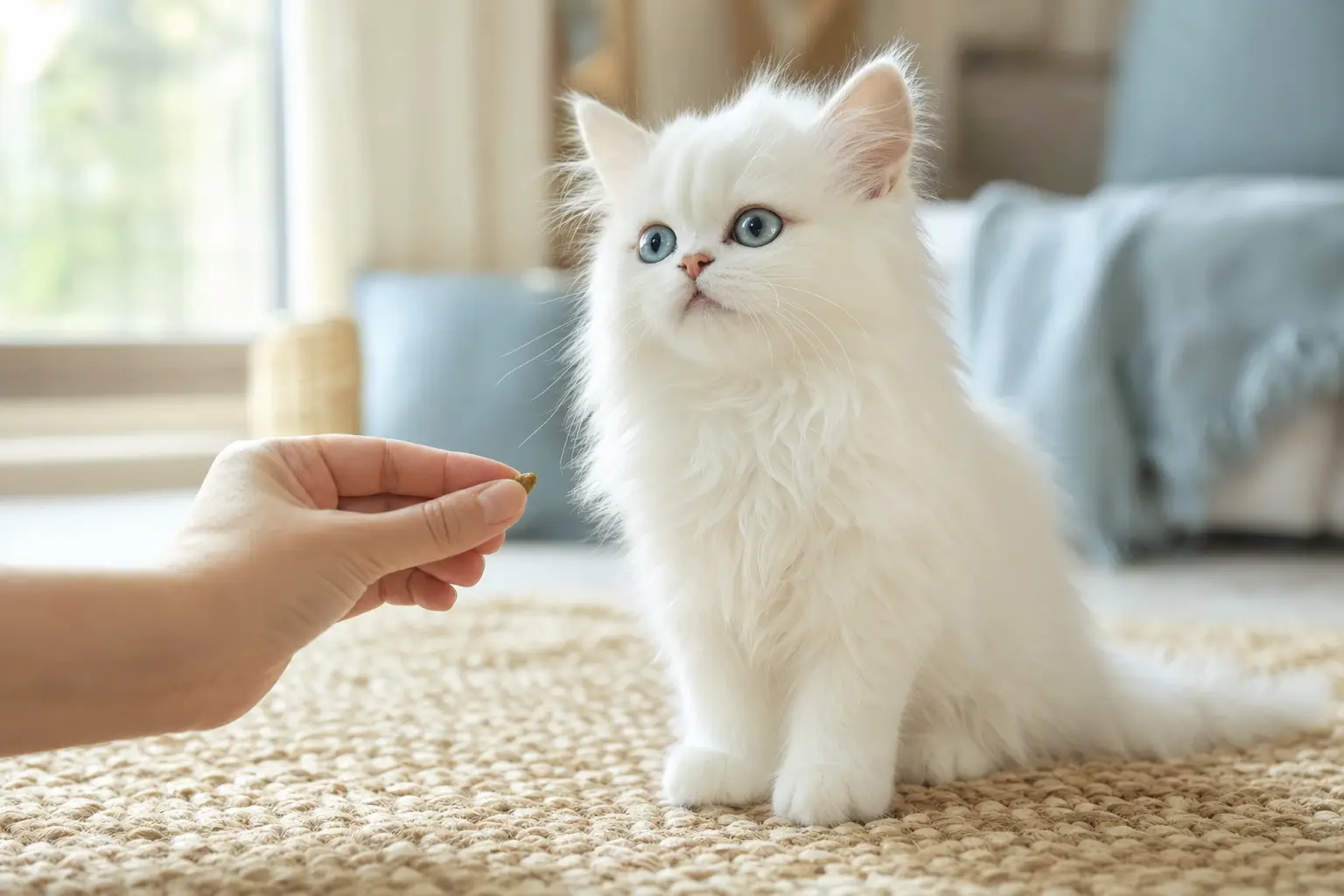
The short version: use the name once when your kitten is calm and likely to hear you. When they look, turn an ear, or orient their head toward you, mark the moment with a soft “yes” or click and offer a tiny food reward, a brief play session, or another favorite reward. Keep practice brief, stop before your kitten loses interest, and never use the name for scolding, chasing, or forced handling.
What a name response should look like
A name response does not have to mean your Persian kitten runs across the room. At first, success may be very small:
- an ear flick in your direction;
- a brief glance;
- turning the head toward your voice; or
- pausing play to check where you are.
These responses show that your kitten is beginning to connect the sound with you and with a pleasant outcome. Coming when called is a separate, more advanced skill. Think of the name as an attention cue: it means, “Notice me.” A cue such as here can later mean, “Move toward me.”
That distinction matters in real life. A kitten may know their name perfectly well and still ignore it while chasing a toy, eating, sleeping deeply, or investigating an exciting new smell. A name response is not a promise of instant attention in every situation.
Why cheerful, reward-based practice works better than pressure
Your kitten learns from what follows the sound of their name. If the name predicts food, play, gentle attention, or another experience they value, turning toward you becomes worthwhile. If it repeatedly predicts shouting, being grabbed, an unpleasant grooming session, or the end of something enjoyable, the name can become something to avoid.
That is why punishment is especially unhelpful here. A kitten may not understand that the reprimand is about a particular action, but they can learn that your voice or their name is followed by something unpleasant. Pressure can also make a kitten less willing to approach or offer relaxed body language.
Reward-based training does not mean allowing unwanted behavior. It means teaching the behavior you want while managing the environment so your kitten is not repeatedly put in situations they cannot handle. If your kitten is scratching during play, for example, calmly redirect them to a suitable toy rather than using their name as a scolding word.
How to teach a Persian kitten its name, step by step
1. Choose one clear name cue
Use the name your household can say consistently. Decide how it should sound, and ask family members not to turn it into a long string of nicknames during the early learning stage. Later, a kitten can learn several affectionate names, but one predictable cue makes the first association easier.
Choose a voice your kitten likes. Cheerful does not have to mean loud, high-pitched, or exaggerated. A warm, light tone is enough. If your Persian kitten is sensitive to sudden sounds, a quieter voice may produce a better response.
2. Start in a calm, familiar place
Begin in a room where your kitten feels secure and there are few competing noises. Choose a moment when they are awake but not intensely focused on food or an exciting toy. You are looking for an easy first win, not a difficult test.
Have the reward ready before you say anything. Suitable options include a very small piece of your kitten’s normal food, a kitten-appropriate treat, a short toy game, or gentle contact if your kitten actively enjoys being touched. Food rewards should remain small, especially when practice happens several times a day, and should fit sensibly into the kitten’s normal feeding plan.
3. Say the name once
Say the name clearly and then wait. Do not repeat it immediately. Give your kitten a moment to process the sound and decide whether to orient toward you.
If they glance at you, turn an ear, or move their head in your direction, use a quiet marker such as yes and deliver the reward almost immediately. The marker helps your kitten understand exactly which action earned the reward.
4. Keep the first sessions tiny
Three to five successful repetitions can be enough for one session. After a short pause, you may do another few repetitions, but finish while your kitten is still comfortable and interested. Several brief sessions spread through the day are usually more useful than one long drilling session.
Allow your kitten to move away. Choosing to return is part of the lesson. You can always try again later when they are rested and receptive.
5. Make the reward meaningful
Every kitten has individual preferences. One Persian kitten may work enthusiastically for a lick of wet food, while another is more interested in chasing a toy. Some enjoy calm praise; others prefer that people keep their hands to themselves.
Watch what your kitten chooses rather than assuming that petting is automatically rewarding. If the reward is not exciting enough, improve the reward or make the exercise easier. You do not need to make your kitten hungry or withhold affection to create motivation.
6. Gradually add distance and distractions
Once your kitten responds in one quiet room, practice from a little farther away. Then try another room, a different family member, or a mild background sound. Change only one part of the exercise at a time.
If the response disappears, the new situation is probably too difficult. Return to the last level where your kitten was successful, reward a few easy responses, and make the next increase smaller. Training should feel like a gentle progression rather than a series of corrections.
A realistic day of name practice
Name training can fit into normal kitten life without turning the day into a lesson plan. For example:
| Everyday moment | What to do | What to avoid |
|---|---|---|
| After a nap | Say the name once when your kitten is already looking around. Reward a glance. | Waking the kitten repeatedly to practice. |
| Before a toy game | Say the name, wait for orientation, then begin a favorite game. | Using the name to abruptly end every enjoyable activity. |
| At mealtime | Practice once or twice before setting down the meal if your kitten can stay relaxed. | Repeating the name while your kitten becomes increasingly frantic. |
| During coat care | Keep name practice separate unless your kitten is calm and comfortable. | Making the name predict brushing, medication, or restraint your kitten dislikes. |
In a typical day, a few seconds after waking, a couple of repetitions before play, and one easy response in another room may be plenty. The goal is a positive pattern woven into ordinary life.
Common mistakes and gentle fixes
Repeating the name over and over
When a kitten does not respond, people often say the name several times with increasing urgency. This can teach the kitten that the name is background noise until the voice changes. Say it once, pause, and then make the next repetition easier instead of louder.
Showing the treat too early
If your kitten only responds when a treat is visible, they may be following the food rather than learning the name. Keep the reward out of sight when possible and present it after the response. A visible reward can help introduce the game, but gradually make the name, rather than the treat in your hand, the signal that starts it.
Expecting a recall when you have only trained attention
If you want your kitten to come to you, build that skill separately. Say the name, reward the look, and then add a friendly here cue while taking a small step backward. Reward even one step in your direction. Increase distance slowly, and do not call from a hiding place only to pull the kitten out or force an unpleasant event.
Practicing when the kitten is overwhelmed
A busy room, unfamiliar visitors, loud appliances, or an intense play session may be too much for early practice. Choose an easier moment. If your kitten is hiding, flattened, hissing, or trying to escape, stop training and give them space. A relaxed kitten learns more readily than a frightened one.
What if your kitten never seems to respond?
First, check the basics: are you using the same name, speaking once, practicing in a quiet setting, and offering a reward your kitten truly values? Also consider whether your kitten is asleep, absorbed in play, or simply not motivated by the reward being offered.
If your kitten consistently fails to orient to ordinary sounds even when they are awake and facing away from you, speak with a veterinarian. Do not test hearing by banging objects or startling the kitten. A lack of response is not automatically a training problem, and a professional can help you decide whether hearing or another health factor needs attention.
If a name has already been associated with shouting or unpleasant handling, you can choose a new cue and build a fresh association. Use the same gentle process: say the new word once, reward orientation, and keep the experience predictable.
Frequently asked questions
How long does it take for a Persian kitten to learn their name?
There is no reliable deadline. Some kittens begin offering a glance after a handful of easy sessions, while others need more repetition or a better reward. Measure progress by relaxed responses in familiar situations, not by whether your kitten responds while distracted.
Should I use food every time?
Food is often convenient, but it is not the only option. Once the response is becoming consistent, you can vary the reward with a brief game, access to a favorite activity, or calm social attention your kitten seeks. Continue to reward often enough that responding remains worthwhile.
Can I rename an adopted Persian kitten?
Yes. A new name can be taught in the same way as any other cue. Keep the sound consistent, pair it with good experiences, and avoid using it when you are upset. A name becomes familiar through repetition and association, not because a kitten is expected to understand it immediately.
The kindest goal
A cheerful name response is a small form of communication. Your kitten learns that listening to you is safe and rewarding, while you learn to notice the subtle signs that they are ready to engage. Keep the sessions short, protect the meaning of the name, and let your Persian kitten succeed often.
For a broader professional overview of humane, reward-based behavior modification, see the American Veterinary Society of Animal Behavior position statements.
Looking for more thoughtful Persian kitten guidance? Explore CTkittens.com for more information about Persian kittens and responsible care.

Rachel Cohen is a journalist and producer with a passion for audio storytelling, health and science reporting, and feline companions.
A graduate of Middlebury College, Rachel spends her weekends exploring the mountains and when she isn’t outdoors or chasing a story, she can usually be found hanging out with her cats.