
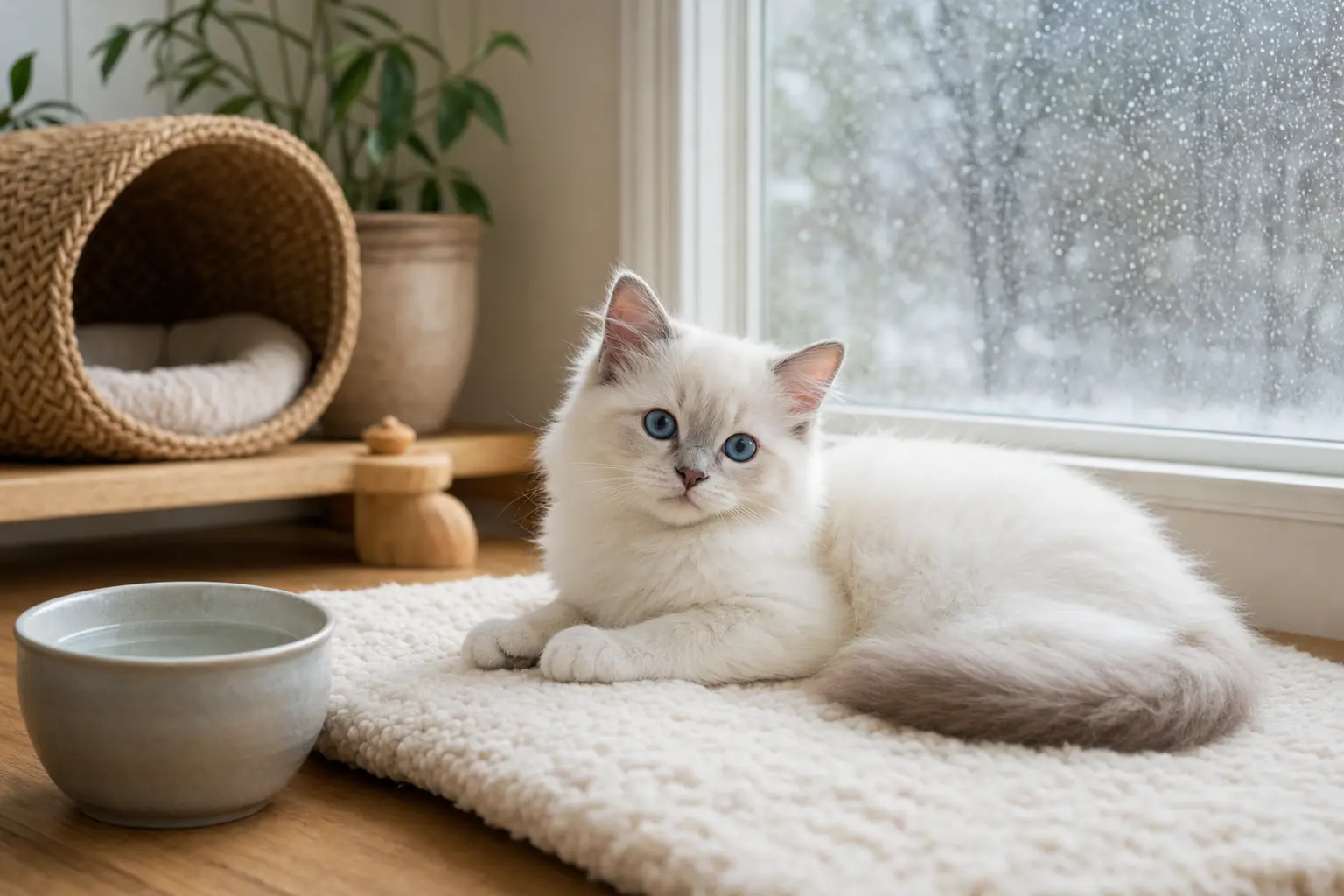
Ragdoll kittens and New England weather are a manageable combination when the kitten lives primarily indoors and the home stays dry, comfortable, and prepared for seasonal changes. Cold snaps, summer humidity, storms, heating systems, and outdoor chemicals usually change your kitten’s routine more than they change the breed itself.
A Ragdoll’s semi-long coat offers some insulation, but it is not waterproof or a substitute for a warm, temperature-controlled home. Young kittens can also be less resilient than healthy adult cats, especially during sudden temperature changes. During the first year, gentle monthly observations can help you notice what your kitten considers comfortable before a weather-related problem develops.
What New England weather changes for a Ragdoll kitten
New England weather can shift quickly between coastal dampness, dry indoor heat, freezing temperatures, heavy snow, thunderstorms, and humid summer days. The most useful response is not to chase a precise thermostat number. Instead, watch your kitten’s behavior and provide choices: a comfortable resting area, access to water, a cool place during heat, and a quiet retreat during storms.
Keep your kitten indoors during extreme conditions. A long coat may make a Ragdoll look well protected from cold, but wet fur can chill the body and mat easily. Heat and humidity can also become dangerous in a poorly ventilated room, conservatory, garage, or parked vehicle.
Weather can also bring indirect hazards:
- Ice-melting products and road salt can irritate paws or cause illness if licked.
- Antifreeze is highly dangerous to cats, even when a spill appears small.
- Open windows and damaged screens create escape and fall risks.
- Power outages may remove heating, cooling, lighting, or access to automatic feeders.
- Thunder, wind, fireworks, and construction noise can cause hiding or panic.
The American Veterinary Medical Association’s cold-weather guidance and the ASPCA’s winter safety advice are useful references for seasonal preparation.
Set up a weather-ready indoor home
Your kitten should be able to move away from a draft, direct sun, or a heating vent without becoming trapped. Place a bed or blanket in a quiet area, but do not put it directly against a radiator, wood stove, space heater, or fireplace. Heating equipment can burn curious kittens and may create a fire risk if fabric or toys are nearby.
During warm weather, offer shade, fresh water, and good airflow. A fan can improve circulation, but it should not be the only cooling plan during a heat wave or power failure. Never leave a kitten in a car, even briefly. If your home becomes unusually hot, contact your veterinarian for advice about safe cooling and whether your kitten needs urgent care.
In winter, dry heated air may contribute to static and a rough-feeling coat. Regular water changes, gentle brushing, and keeping the litter box clean can support normal routines. If you use a humidifier, clean it as directed and avoid adding essential oils. Many concentrated oils can be toxic to cats.
Windows deserve a seasonal check. A secure, intact screen is not the same as an open window, and some kittens can push through loose screens. Before spring ventilation begins, inspect every screen and keep the kitten away from unsecured balconies.
A gentle first-year, month-by-month observation guide
Use the month numbers as months at home, not as a fixed calendar. A kitten arriving in January will have different weather in month one than a kitten arriving in July. Apply the seasonal suggestion whenever that weather occurs.
| Month at home | What to observe | A practical adjustment |
|---|---|---|
| 1 | Baseline appetite, water intake, litter use, sleep, play, and favorite resting spots. | Record what normal looks like before making weather-related changes. |
| 2 | During a cold spell, notice whether the kitten seeks warmth, hides more, or feels cold at the ears and paws. | Offer a warm resting area and keep the kitten away from drafts and outdoor doors. |
| 3 | Dry indoor air, static, and coat tangles around the legs, chest, and behind the ears. | Brush gently and briefly several times a week rather than waiting for a large mat. |
| 4 | Spring temperature swings, open-window interest, sneezing, or exposure to muddy entryways. | Repair screens, keep windows secure, and ask your veterinarian about parasite prevention. |
| 5 | Pollen season changes, damp paws, and whether outdoor shoes or clothing are being investigated. | Keep the kitten indoors, wipe visible dirt from paws with a damp cloth, and avoid household chemicals nearby. |
| 6 | The first hot or humid spell: reduced play, seeking cool floors, or unusual breathing. | Provide shade, water, and airflow. Panting, weakness, drooling, or collapse requires urgent veterinary attention. |
| 7 | Peak summer comfort, sunlit rooms, air-conditioning reliability, and water consumption. | Check rooms before leaving home and never rely on a closed sunroom or garage as a safe cool space. |
| 8 | Storm reactions such as hiding, vocalizing, pacing, or refusing to leave a safe area. | Prepare a quiet room with familiar bedding, water, a litter box, and the open carrier nearby. |
| 9 | Cooler nights and the return of indoor heating; watch for changes in sleeping and grooming. | Keep heating vents and fireplaces inaccessible and continue regular coat checks. |
| 10 | Wet autumn weather, muddy entrances, damp fur, and slippery floors. | Dry the coat gently if it becomes wet and keep a towel near the door without making outdoor access routine. |
| 11 | First freezes, road salt, ice-melting products, and possible snow removal chemicals. | Keep products stored securely. If paws contact a substance, prevent licking and call your veterinarian for instructions. |
| 12 | Compare the kitten’s winter behavior with the first month’s baseline and review emergency plans. | Refresh food, water, medications, carrier supplies, identification details, and a backup power plan. |
Seasonal care details that matter most
Cold, snow, and heating season
There is no benefit to taking a young Ragdoll kitten outside in snow simply to see how it reacts. Wet fur can become chilled, and salt or de-icer may be irritating or poisonous when groomed from the paws. If your kitten accidentally gets a chemical on its coat or paws, stop grooming if possible and contact a veterinarian promptly rather than guessing at home treatment.
Keep antifreeze containers sealed and clean spills immediately. The ASPCA’s antifreeze safety information explains why suspected exposure should be treated as an emergency. Do not wait for symptoms.
Spring rain and changing temperatures
Spring often brings a mixture of cold mornings, warm afternoons, rain, and open windows. A Ragdoll kitten may be curious about screens, puddles, and the movement outside, but curiosity is not a safety assessment. Check window hardware, keep balcony doors closed, and ask your veterinarian which flea and tick prevention is appropriate for your kitten’s age, weight, and lifestyle.
Summer heat and humidity
Watch for a change from ordinary rest to distress. Persistent panting, drooling, vomiting, marked weakness, confusion, or collapse can indicate a serious problem and warrants immediate veterinary help. Do not force a frightened or overheated kitten into a cold bath. Move the kitten to a cooler area, call a veterinary professional, and follow the instructions you receive.
Storms, outages, and autumn preparation
Before a forecast storm, bring supplies into one familiar room and make sure the carrier is easy to reach. A microchip with current contact details, a secure carrier, a small supply of food, bottled water, litter, and any prescribed medication belong in a basic emergency kit. Never force a kitten out of hiding unless there is an immediate danger.
When a weather-related change needs veterinary advice
A monthly log is helpful because it gives your veterinarian a comparison, not because every variation is an emergency. Contact a veterinary professional if your kitten has ongoing appetite loss, repeated vomiting or diarrhea, unusual lethargy, persistent coughing or sneezing, labored breathing, a sudden change in urination, or a coat that stays wet or develops painful mats.
Cold exposure can become serious. Shivering, weakness, confusion, unusual sleepiness, pale or cool skin, or difficulty walking after exposure should be treated as urgent concerns. Heat-related signs such as panting at rest, drooling, weakness, vomiting, collapse, or abnormal behavior also require prompt veterinary care. Kittens with heart, respiratory, or other health conditions may need a more conservative plan, so follow the advice of the veterinarian who knows your cat.
Simple monthly tracking template
Keep the record low-pressure. Once a month, note the date, the season, and a few observations:
- Indoor conditions, such as unusually dry air, a heat wave, or a power outage.
- Appetite, water intake, litter habits, energy, and sleep.
- Coat condition, mats, dampness, paw irritation, and grooming tolerance.
- Response to thunder, wind, fireworks, or other weather-related noise.
- Any adjustment that helped, plus anything to discuss at the next veterinary visit.
Patterns matter more than a single quiet afternoon. A kitten that is eating, using the litter box, grooming, and returning to normal play is giving you reassuring information. When several normal behaviors change together, call your veterinarian instead of assuming the weather is responsible.
FAQ
Can a Ragdoll kitten go outside in the snow?
It is safest to keep a young kitten indoors during snow, freezing rain, and extreme cold. If you eventually want supervised harness time, wait until your kitten is appropriately vaccinated and comfortable with the harness, and choose mild, dry conditions with veterinary guidance.
Does a Ragdoll’s long coat keep it warm?
The coat provides some insulation, but it does not make a kitten safe outdoors in cold, wet, or windy weather. Wet fur can chill the body and form mats, while indoor heat can create a different problem in an overheated room.
Should I shave my Ragdoll for summer?
Routine shaving is usually unnecessary and can remove useful protection from sun and temperature changes. Regular gentle brushing is a better first step. Ask a veterinarian or qualified cat groomer about severe mats rather than cutting them close to the skin yourself.
How can I help during a thunderstorm?
Close windows, reduce sudden noise, provide a familiar hiding place, and keep the carrier accessible. Stay calm and let the kitten choose whether to hide or approach. Never give a human calming medication unless a veterinarian specifically prescribes it.
A comfortable first year in every season
For Ragdoll kittens and New England weather, consistency is the goal: a secure indoor environment, careful coat and paw checks, safe heating and cooling, and a plan for storms and power outages. A few calm notes each month can help you recognize your kitten’s normal patterns and respond sooner when something truly changes.
For more guidance on welcoming and caring for a Ragdoll kitten, explore CTkittens.com.
Reliable resources

Rachel Cohen is a journalist and producer with a passion for audio storytelling, health and science reporting, and feline companions.
A graduate of Middlebury College, Rachel spends her weekends exploring the mountains and when she isn’t outdoors or chasing a story, she can usually be found hanging out with her cats.
The tip about checking window screens before spring is lowkey crucial, my kitten pushed thru a loose one once and scared the crap outta me.