

A Ragdoll Kitten May Want Company, Not Constant Cuddles
One of the easiest mistakes prospective owners make is assuming that an affectionate Ragdoll kitten will want to be held whenever it comes near. Many Ragdolls are people-oriented, gentle, and happy to remain in the same room as their family. That does not necessarily mean they want continuous lap time.
Understanding this distinction is especially useful in a home office, apartment, or busy household where people move between rooms, answer calls, and follow predictable daily routines. A Ragdoll kitten may be asking for social connection while choosing a very independent form of contact.
The overlooked difference between following and being held
A kitten that trails you from the desk to the kitchen, waits outside the bathroom, or settles near your chair is not always asking to be touched. It may simply prefer having you within sight. From the kitten’s point of view, proximity can provide reassurance without the loss of control that comes with being lifted.
This is an important part of Ragdoll kitten behavior. The breed is often associated with a relaxed, companionable temperament, but “companionable” can mean sitting beside you, watching you work, or napping at your feet. It does not promise that every individual will enjoy being carried or squeezed.
Notice what happens after your kitten approaches. Does it lean into your hand, climb onto your lap, and remain settled? Or does it sit nearby, glance at you, and move away when you reach down? Those details tell you more than the fact that it followed you.
What companionship can look like during a normal day
Ragdoll kittens may show different preferences at different times. After waking, a kitten may be more interested in a brief greeting and gentle strokes. During a noisy work call, it may choose the floor beside your chair rather than your lap. In the evening, when the household becomes calmer, it may seek longer contact.
These changes are not necessarily inconsistency. A kitten’s interest in touch can be influenced by tiredness, recent play, temperature, household noise, and whether it has already had social interaction. A kitten that curls beside you but not on you may be comfortable, not distant.
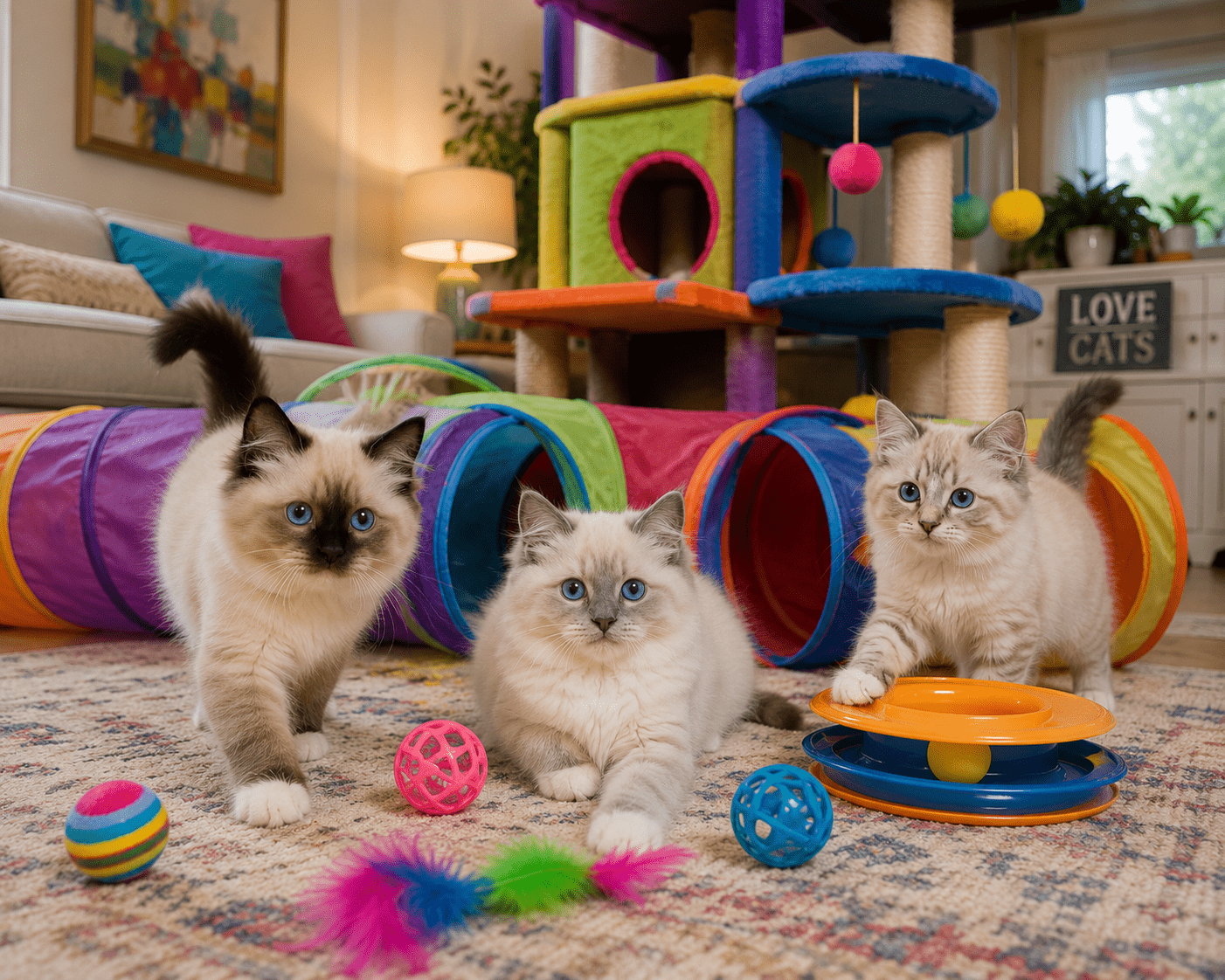
In a compact home, this can be easy to observe. A Ragdoll kitten might position itself in the doorway while you cook, then relocate to a rug near the sofa. It is maintaining a connection through visibility rather than demanding attention. That small choice is useful information: the kitten may value shared space as much as direct handling.
Why affectionate kittens can be misunderstood
Breed descriptions can create an expectation that a Ragdoll will be naturally tolerant of every kind of handling. Individual personalities vary widely, and a young kitten is still learning what human contact means. If every approach ends with being picked up, the kitten may begin to hesitate before coming close.
This is particularly relevant with a large, soft-coated breed. A Ragdoll kitten can appear wonderfully easy to cuddle, but appearance is not consent. A kitten may enjoy stroking along the shoulders while disliking pressure around the belly, or accept a short lift while preferring to keep all four paws on the floor.
For prospective owners, the useful question is not “Will this breed always be cuddly?” A better question is, “Can I appreciate a cat that expresses affection through presence, brief touch, and changing preferences?” That expectation is more realistic and usually produces a calmer relationship.
How to respond when your kitten comes close
You do not need to ignore a Ragdoll kitten that approaches, nor do you need to turn every approach into a handling session. Let the kitten’s next movement guide you.
- Pause before reaching. Give the kitten a moment to sniff, look at you, or rub against your leg.
- Offer a hand at a low level. A kitten that wants contact can move toward your fingers; one that does not can remain nearby without being cornered.
- Keep touch brief at first. A few calm strokes can be more welcome than a long cuddle imposed too quickly.
- Watch the exit. If the kitten turns away, shifts its weight, or walks off, let it leave without following or scooping it up.
- Make nearby resting places comfortable. A washable mat beside your desk or sofa allows the kitten to participate in family life without needing to sit on a person.
One practical benefit of this approach is that your kitten’s approach remains meaningful. Coming near you does not automatically predict restraint. Over time, that can encourage the kitten to initiate contact more confidently.
Three small observations that help you choose a good fit
1. The greeting may be more important than the cuddle
Some kittens seem satisfied by a short greeting when you enter a room. They may rub your ankles, look up, and then return to what they were doing. A prospective owner who expects a long lap session could miss that this is a perfectly social interaction.
2. A nearby kitten may be participating in your routine
During computer work, a Ragdoll kitten may settle where it can see your hands, face, or chair movement. It may not need entertainment every minute. Quietly sharing a routine can be part of its preferred relationship with you.
3. Being easygoing does not mean being passive
Ragdolls are often described as calm, but a calm kitten still has preferences. It may choose when to play, where to sleep, and how long physical contact lasts. Respecting those choices helps reveal the individual personality beneath the breed reputation.
Persian vs. Ragdoll: How company may look different
Both Persian and Ragdoll kittens can form close bonds with their families, but their social signals may be expressed differently. Many Ragdolls are inclined to follow people between rooms or remain visibly nearby, making their companionship easy to notice. Persians are often more settled in their approach, showing affection through quiet proximity, a gentle greeting, or relaxing in a favored spot near the household. Neither breed guarantees a lap cat, and individuals vary greatly. The practical difference for a prospective owner is the kind of presence they enjoy: a Ragdoll may seem more involved in the movement of the home, while a Persian may appear more content to share calm space. In both cases, allowing the kitten to control the length and intensity of handling is more useful than relying on breed labels.
A more realistic picture of life with a Ragdoll kitten
A Ragdoll kitten may be a wonderful choice for someone who wants a social companion but does not need constant physical contact. Its affection may appear as a shadow in the hallway, a warm body beside the desk, a short greeting after a nap, or a quiet decision to remain in the same room.
When you observe those choices instead of immediately intervening, you learn what your individual kitten actually enjoys. That makes everyday care gentler and helps build trust without demanding a single definition of affection.
For more practical guidance on choosing and living with Persian and Ragdoll kittens, explore CTkittens.com.

Rachel Cohen is a journalist and producer with a passion for audio storytelling, health and science reporting, and feline companions.
A graduate of Middlebury College, Rachel spends her weekends exploring the mountains and when she isn’t outdoors or chasing a story, she can usually be found hanging out with her cats.
The point about “watching the exit” is especially useful. Letting a kitten walk away without being followed teaches it that closeness won’t cost it control, which probably makes future affection feel safer.
The point about doorway sitting really stood out. A kitten choosing a spot where it can keep you in view may be showing attachment just as clearly as one that climbs into your lap.