
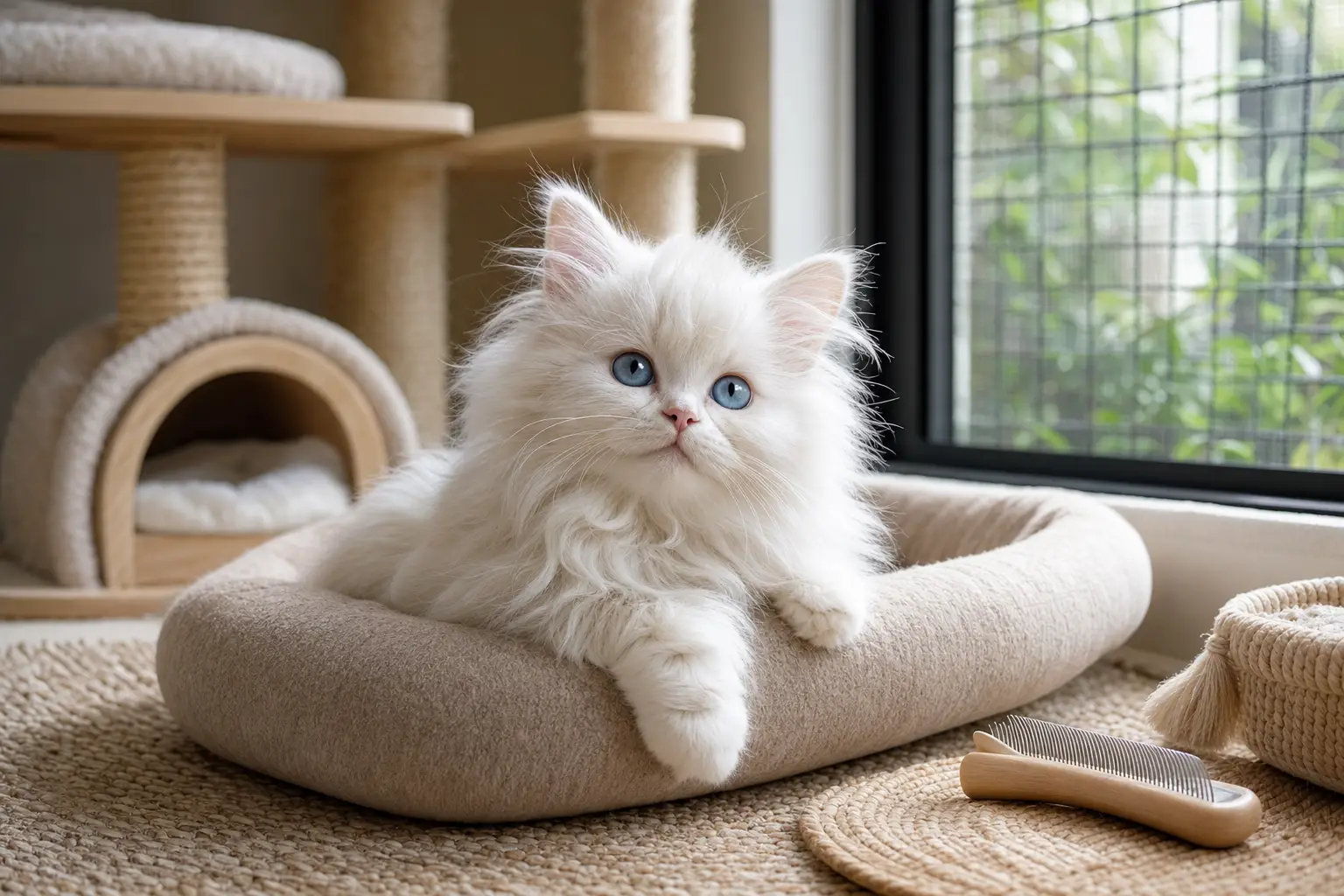
Persian Kittens: Apartment or House? A Thoughtful Guide
When people ask whether Persian kittens are better suited to an apartment or a house, the short answer is: either can work well. A calm, secure apartment with thoughtful enrichment may be a better home than a large house with unsafe outdoor access, constant noise, or little time for grooming and companionship.
The most useful question is not how many rooms you have. It is whether you can provide a safe indoor territory, predictable routines, regular coat and eye care, suitable veterinary attention, and a good match for the kitten’s individual temperament. A careful breeder should help you think through that fit rather than rushing you toward a deposit.
Apartment or house: which is better for a Persian kitten?
Persians are often relatively calm and people-oriented, but they are still individual cats. Some settle happily into a quiet apartment, while others are more confident in a busy family home with several separate spaces. Their need for comfort, stimulation, and security does not disappear because they are not an especially athletic breed.
| Home type | Potential advantages | What needs careful planning |
|---|---|---|
| Apartment | Fewer rooms to supervise, controlled indoor access, and a compact routine that can suit a calm kitten. | Noise from neighbors, limited space for separated resources, balcony and window hazards, landlord rules, and time spent alone. |
| House | More options for quiet rooms, family separation, play areas, and multiple litter or feeding locations. | Open doors, stairs, dogs, children, fireplaces, garages, toxic plants, and easy access to an unsecured outdoors. |
In both settings, prioritize usable territory rather than empty floor area. A Persian kitten needs places to retreat, nap, observe the room, play, eat, drink, and use the litter box without being disturbed. A cat tree, sturdy shelf, covered bed, or quiet room can make a modest home feel more flexible.
What a Persian kitten needs in either home
A safe indoor environment
Secure windows with properly fitted screens, keep balconies inaccessible unless they have been professionally enclosed for cats, and use a separate room during moving, deliveries, and busy gatherings. In a house, an indoor-only plan also means checking exterior doors, cat flaps, garages, sheds, and rooms where chemicals or tools are stored.
Persians have a long coat that can mat if grooming is neglected. Their facial structure also varies, and some individuals with more extreme flat-faced features may be more vulnerable to breathing, eye, dental, or heat-related problems. This does not mean every Persian will develop these issues. It does mean that sensible home preparation includes a cool, well-ventilated resting area and a willingness to discuss facial structure and health history honestly with the breeder and your veterinarian.
Daily care that fits your schedule
Most long-coated Persians need frequent combing, often daily, to prevent tangles close to the skin. Eye cleaning may also be part of routine care, depending on the kitten’s face, tear production, and veterinary advice. Ask the breeder to demonstrate the tools and technique they use, and begin short, gentle grooming sessions rather than waiting until the coat is difficult to manage.
Plan for interactive play, even if your kitten is relaxed. Two short play sessions may be more realistic and useful than leaving a pile of toys untouched. Rotate safe toys, offer scratching surfaces, and provide a high or partly enclosed resting place. In an apartment, these additions help create variety without requiring a large footprint. In a house, they help prevent the kitten from being overwhelmed by too much space.
Resources in the right places
Place food, water, sleeping areas, scratching posts, and litter boxes where the kitten can reach them without passing through a noisy or threatening area. Keep litter boxes away from food and provide easy access at night. Many multi-cat homes follow the general guideline of one box per cat plus an extra, but the practical goal is enough clean, accessible options for every cat.
If your kitten will be alone for long workdays, discuss that honestly with the breeder. A larger home does not replace social contact. Depending on your household, you may need a gradual settling-in plan, a midday visit, or a different age and temperament match.
How to adapt a breeder question list to your home
A question list is most useful when it creates a real conversation. Do not ask only whether a kitten is registered or available. Explain your home, your schedule, your experience, and any children or animals already living with you. Then listen for specific answers rather than general reassurance.
Questions about health and facial structure
- What health screening has been completed for the parents, and may I see the results or veterinary records?
- Has the line been evaluated for conditions relevant to Persian cats, such as polycystic kidney disease, and what type of test was used?
- Have the parents had veterinary assessments for heart health, breathing, eyes, teeth, and overall facial function?
- Have any kittens in previous litters needed treatment for breathing difficulty, blocked tear drainage, dental problems, or serious skin and coat issues?
- What vaccinations, parasite treatments, examinations, identification, and written records will accompany the kitten?
- What does your contract say about a serious inherited or congenital condition, and what support do you provide if a placement cannot continue?
Ask for documentation, not just a statement that a cat is healthy. A genetic test addresses the condition it was designed to detect; it is not a complete health guarantee. Similarly, registration papers do not by themselves establish responsible breeding or a suitable match.
For general background, compare the Persian breed information provided by organizations such as the International Cat Association and the Cat Fanciers’ Association. For questions about a specific kitten’s health, your own veterinarian is the appropriate source.
Questions about temperament and socialization
- How would you describe this kitten’s energy level, confidence, handling tolerance, and response to new people?
- Has the kitten been raised in a household environment or a separate facility?
- What sounds, surfaces, grooming, carriers, and gentle handling has the kitten experienced?
- How does the kitten respond to children, other cats, dogs, visitors, or periods of quiet?
- Which kitten would you choose for an apartment with a calm adult, and which would suit a busier family home?
- Would you recommend an older kitten or young adult if you want a more clearly established temperament?
A good breeder should be able to describe differences between littermates without labeling one kitten as perfect for everyone. Watch the interaction between the breeder and the cats. You are looking for calm handling, clean and comfortable living conditions, and an understanding of each kitten as an individual.
Questions about care after the kitten comes home
- What food, litter, grooming tools, and daily routine should I continue at first?
- How often should I comb the coat, clean the eyes, trim the nails, and introduce a carrier?
- What signs would mean I should contact a veterinarian promptly?
- When should the kitten have its first examination with my veterinarian?
- Can I contact you with questions after the kitten comes home?
- What happens if my circumstances change and I can no longer keep the cat?
A breeder who cares about long-term welfare should welcome practical questions about grooming and veterinary care. You should not feel embarrassed to ask how much routine maintenance costs or how difficult a kitten has been to groom. Those answers may prevent an unhappy placement later.
Extra questions for an apartment
If you live in an apartment, tell the breeder about elevator rides, shared hallways, neighbors, noise, and the number of hours the kitten may be alone. Ask whether the kitten has experienced vacuum cleaners, doorbells, visitors, and handling in a carrier. A confident kitten may adjust well, but a gradual introduction is still kinder than expecting immediate comfort.
Check the lease before you commit, including restrictions on breed, number of pets, deposits, and balcony access. Prepare a quiet settling-in room with a litter box, food, water, bedding, a hiding place, and safe toys. Let the kitten explore at its own pace rather than carrying it through the entire apartment on the first day.
Extra questions for a house
More space can be useful, but it also creates more choices and more hazards. Ask yourself whether the kitten will be allowed into every room, whether doors can be kept closed when needed, and how you will manage introductions to dogs, young children, or older cats.
If you want the cat to experience the outdoors, discuss a secure enclosure or supervised access with your veterinarian and breeder. A house does not require free-roaming access. For many families, a protected catio, enclosed garden area, or indoor enrichment provides outdoor stimulation with better control over traffic, predators, infectious disease, and escape.
A simple decision check before you reserve a kitten
Before paying a deposit, write down clear answers to these questions:
- Do I have permission to keep the cat, and can I afford routine grooming and veterinary care?
- Can I keep windows, balconies, doors, plants, chemicals, and appliances safe?
- Where will the kitten retreat when the home is noisy?
- Who will provide care during workdays, travel, illness, or emergencies?
- Can I commit to regular coat care even when the kitten resists?
- Have I identified a veterinarian who is comfortable examining Persian cats?
- Has the breeder answered health and temperament questions with specific records and examples?
- Am I choosing this kitten because the match is right, or because I fear someone else will reserve it?
Pressure is a reason to slow down, not a reason to decide faster. Be cautious if a breeder refuses reasonable questions, will not discuss health history, will not show where the cats are raised, offers no written agreement, or insists on immediate payment. A waiting list can be inconvenient, but it is usually less costly than accepting a poor match.
Frequently asked questions
Can a Persian kitten live happily in an apartment?
Yes. A secure apartment can work very well when it offers quiet resting places, vertical or varied territory, play, grooming, clean litter facilities, and regular companionship. The kitten’s temperament and your daily routine matter more than the address.
Does a Persian kitten need a house with a garden?
No. A garden is not a requirement, and unrestricted outdoor access introduces risks. If you want outdoor enrichment, consider a secure enclosure or supervised arrangement rather than assuming a house automatically makes outdoor roaming safe.
Is a bigger home always better for a Persian?
No. More rooms can help, but they can also increase hazards and make supervision harder. A smaller home that is calm, enriched, and carefully arranged may be the better environment.
What should I ask a breeder first?
Start with health records, relevant screening, temperament, socialization, grooming needs, and the breeder’s return or support policy. Then describe your actual home so the breeder can discuss fit rather than simply sell you an available kitten.
The best choice is the home you can manage well
Persian kittens do not need a particular building type as much as they need thoughtful care. An apartment may be ideal for one kitten, while another may thrive in a house with a quiet room and patient introductions. Use the breeder’s answers, your veterinarian’s guidance, and an honest review of your routine to make the decision without rushing.
Ready to learn more about choosing and caring for a Persian kitten? Explore CTkittens.com for more practical guidance before you bring your new companion home.
Helpful starting points
For general cat-care and welfare information, visit International Cat Care. For veterinary education and feline health resources, see the Cornell Feline Health Center. These resources can complement, but not replace, advice from your veterinarian and the records provided by a breeder.

Rachel Cohen is a journalist and producer with a passion for audio storytelling, health and science reporting, and feline companions.
A graduate of Middlebury College, Rachel spends her weekends exploring the mountains and when she isn’t outdoors or chasing a story, she can usually be found hanging out with her cats.

