
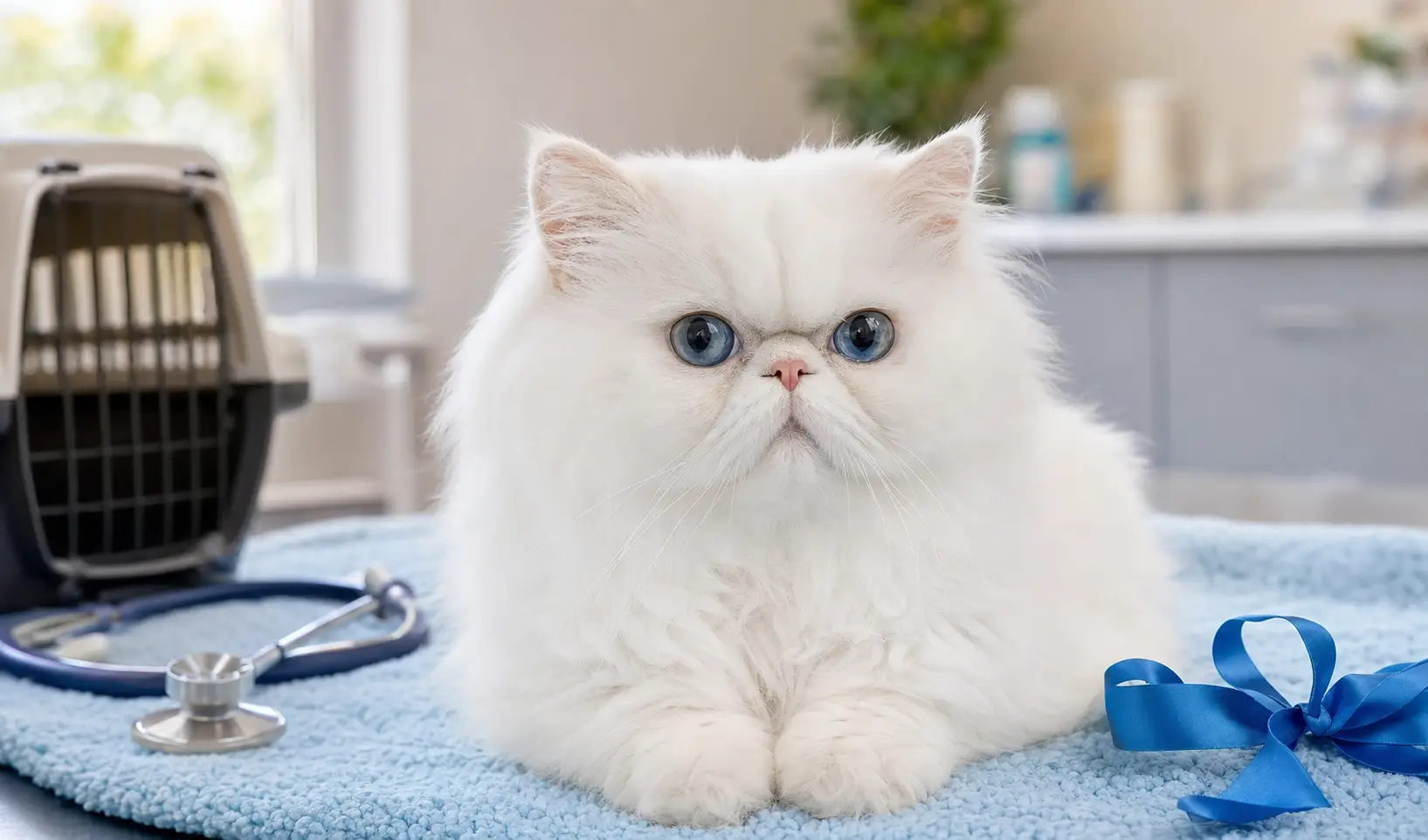
Persian Kitten to Young Adult: When Vet Plans Change
The move from a Persian kitten to a young adult is a meaningful milestone. You may have planned new photos, a special meal, or a relaxed day of play, only to learn during a veterinary visit that your cat needs a closer look, a diet adjustment, dental care, or follow-up testing.
That does not mean the milestone is ruined. A veterinary finding is a reason to pause and make an informed plan—not automatically a diagnosis or a prediction about your cat’s future. The safest response is to ask what was found, how urgent it is, and what should happen next. Then celebrate in a way that supports your cat rather than adding stress.
What changes from kitten to young adult?
Many feline life-stage frameworks place young adulthood around the first birthday, although individual cats do not mature on an exact schedule. Your Persian may still be filling out, developing an adult coat, settling into a personality, or learning household routines after turning one.
The first adult-oriented checkup is a useful reset point. Your veterinarian may review vaccination needs, parasite prevention, nutrition, body condition, dental health, grooming, behavior, and reproductive status. If your cat is not yet spayed or neutered, ask about timing and anesthesia planning rather than relying on a general birthday rule.
Vaccines are also not automatically identical for every cat. The right schedule depends on factors such as age, previous records, health, lifestyle, local disease risks, and the specific vaccine used. The American Association of Feline Practitioners vaccination guidance can provide useful background, but your own veterinarian should interpret it for your cat.
When the celebration does not go as planned
A veterinarian might notice something subtle during an examination: a body condition that is higher or lower than ideal, crowded teeth, irritated skin beneath a mat, excessive tearing, a heart murmur, or breathing that deserves further assessment. Persian cats can also need extra attention to facial anatomy, coat care, and inherited health risks.
Try not to jump from a finding to the worst possible conclusion. For example, a heart murmur is a physical finding, not a complete diagnosis. Your veterinarian may recommend monitoring, blood pressure measurement, an electrocardiogram, or an echocardiogram depending on the examination and the cat’s history. Likewise, tear staining can be cosmetic in some cats, while squinting or painful discharge needs prompt care.
Before leaving the appointment, ask these practical questions:
- What exactly did you observe, and where is it located?
- Is this urgent today, or can we investigate it at a scheduled follow-up?
- What signs should I monitor at home?
- Which test would answer the most important question first?
- Should food, exercise, grooming, medication, or treats change temporarily?
- When should I contact the clinic again?
Request written instructions if the plan feels complicated. It is reasonable to ask the clinic to explain unfamiliar terms, provide an estimate before optional testing, and tell you what would make the situation more urgent.
Persian-specific health checkpoints
Breathing and facial structure
Persians are brachycephalic, meaning their skull shape is relatively short and broad. That structure can be associated with narrowed airways, dental crowding, eye problems, and difficulty coping with heat or exertion. A small amount of tear staining is not the same as respiratory distress, and a quiet cat is not necessarily an unhealthy one; the pattern and severity matter.
Persistent noisy breathing, frequent snoring while awake, reduced tolerance for play, gagging, or open-mouth breathing should be discussed with a veterinarian. Open-mouth breathing, blue or gray gums, collapse, or obvious struggle to breathe should be treated as an emergency rather than a breed characteristic.
Eyes and tear staining
Persian facial shape can affect tear drainage. Keep the area clean and dry with a method approved by your veterinarian, and avoid household products, essential oils, or harsh whitening agents near the eyes. Contact the clinic promptly for squinting, rubbing, cloudiness, marked redness, swelling, or thick discharge. These signs can indicate pain or injury and should not be dismissed as ordinary staining.
Coat, skin, and grooming
A long Persian coat can hide mats, parasites, damp skin, or small areas of irritation. Regular gentle combing is usually easier than trying to remove large mats all at once. If a mat is tight against the skin, ask a professional groomer or veterinary team for help; cutting close to the skin with scissors can cause serious injury.
Use the transition appointment to establish a realistic grooming routine. A few short sessions with rewards may be kinder and more effective than one long session after the coat has become tangled. If grooming suddenly becomes painful or your cat resists a familiar routine, ask whether skin, joint, dental, or other discomfort could be contributing.
Teeth and inherited risks
Dental disease can begin while a cat is still young, and crowded teeth may make cleaning more difficult. Ask your veterinarian to show you any areas of concern and recommend an appropriate home-care product. Never use human toothpaste or human pain medicine for a cat.
Polycystic kidney disease, or PKD, is an inherited condition associated with Persian and related cat lines. A breeder’s health records, family history, and veterinary advice can help determine whether genetic testing or other evaluation is appropriate. The Cornell Feline Health Center overview of PKD explains why screening and responsible breeding records matter. A result should always be interpreted with your veterinarian; it is not a reason to start supplements or treatment without guidance.
Turn an unexpected finding into a clear plan
When the appointment changes direction, write down the plan before you leave. A simple checklist can prevent worry from becoming guesswork.
| What you hear | A useful next step |
|---|---|
| Weight or body-condition concern | Ask for a target range, feeding amount, treat limit, and recheck date. Do not make a sharp calorie reduction without veterinary guidance. |
| Possible dental problem | Ask whether an anesthetized dental examination or cleaning is recommended and what signs of oral pain to watch for. |
| Heart murmur or unusual heart sound | Ask what follow-up is needed, whether activity should change, and which symptoms require urgent attention. |
| Eye, skin, or coat concern | Follow the cleaning or medication instructions exactly and ask how to prevent recurrence without irritating the area. |
| Possible inherited condition | Gather breeder and parent health records, then discuss the most informative test instead of ordering several tests randomly. |
If a test or procedure is recommended, ask whether your cat should fast, whether medication should be withheld, how results will be delivered, and what recovery will look like. If the explanation is unclear, a second veterinary opinion can be appropriate—especially for a non-urgent, complex decision. Do not delay urgent care while seeking another opinion.
Nutrition during the transition
There is no requirement to switch food on the exact day a Persian turns one. Your veterinarian may recommend moving from a kitten formula to a complete and balanced adult-maintenance diet, keeping the current food longer, or changing calories based on growth and body condition.
When a change is appropriate, make it gradually over several days unless your veterinarian gives different instructions. Measure meals rather than estimating by eye, and count treats as part of the daily intake. Wet food can help some cats consume more water, while dry food may be convenient; neither format is automatically best for every Persian. The priority is nutritional adequacy, an appropriate calorie level, and a diet your cat tolerates.
Avoid using a birthday treat as a substitute for medical care. Rich table scraps, bones, unbalanced homemade diets, and sudden food changes can create more problems than pleasure. For evidence-based nutrition principles, the WSAVA Global Nutrition Guidelines are a useful starting point.
How to celebrate safely after a difficult appointment
Keep the celebration quiet and familiar. Offer a favorite approved treat, a short play session, a new puzzle feeder, gentle brushing if your cat enjoys it, or a comfortable nap spot. Let your Persian choose whether to interact; forcing photos, costumes, visitors, or handling after a stressful examination can make recovery harder.
If your cat has started medication or needs observation, make the celebration about care: prepare the prescribed food, set reminders, organize the carrier, and create a calm recovery area. A milestone is still worth marking when the best gift is a sensible treatment plan.
When to seek urgent veterinary help
Follow the instructions from your own clinic first. In general, seek urgent help for open-mouth breathing, severe or worsening breathing difficulty, collapse, blue or gray gums, uncontrolled bleeding, a serious eye injury, repeated vomiting with weakness, or straining without being able to urinate. A sudden major change in behavior, refusal to eat, or marked lethargy also warrants a same-day call for advice, particularly if your cat has a known condition.
Do not give human pain relievers, leftover antibiotics, or another pet’s medication. Cats can be harmed by commonly used human drugs, and treating the wrong problem can delay appropriate care.
FAQ about the Persian kitten to young adult transition
Should a Persian switch to adult food at exactly 12 months?
Not necessarily. Twelve months is a common planning point, but the best timing depends on growth, body condition, activity, health, and the diet itself. Ask your veterinarian for a calorie target and transition schedule.
Are noisy breathing and watery eyes normal for a Persian?
Facial structure can contribute to both, but persistent or worsening signs should not be assumed normal. Breathing effort, open-mouth breathing, squinting, pain, cloudiness, or thick discharge need veterinary attention.
Can a young Persian with a murmur still have a good quality of life?
Possibly, but the answer depends on the cause and severity. A murmur alone cannot establish a diagnosis or prognosis. Follow-up testing helps your veterinarian decide whether monitoring, treatment, or activity changes are needed.
References and next step
This article is general educational information, not a diagnosis or replacement for veterinary care. Helpful background resources include the Merck Veterinary Manual’s routine cat-care guidance, Cornell Feline Health Center information on PKD, and the WSAVA nutrition resources linked above. Recommendations can vary by country, product, and individual cat.
Ready for the next stage? Explore more Persian kitten care guidance and practical resources at CTkittens.com.

Rachel Cohen is a journalist and producer with a passion for audio storytelling, health and science reporting, and feline companions.
A graduate of Middlebury College, Rachel spends her weekends exploring the mountains and when she isn’t outdoors or chasing a story, she can usually be found hanging out with her cats.
Kinda wild how a first-birthday vet visit can turn into a whole health checklist, but asking “which test answers the biggest question first” is honestly gonna save folks a lotta panic and cash.
The bit about a heart murmur being a finding, not a diagnosis, is lowkey the exact reminder anxious cat owners like me needs before spiraling at the vet.
That bit about getting written instructions hits hard, cuz once the vet mentions a murmur or testing my brain basically logs off and remembers none of the plan lol.
The bit about awake snoring not just being “a Persian thing” kinda got me, since folks excuse breed traits way too long when somethings actually wrong.
The bit about awake snoring not just being “a Persian thing” hit me, cause honestly thats the kinda symptom lots of owners would shrug off till it gets bad.
Honestly, the bit about not brushing off squinting as “just Persian eyes” kinda shook me, cause I’ve definitely assumed watery eyes was always normal for the breed ngl.
Ngl the bit about squinting not being “just Persian stuff” got me, I’d probably brushed it off before and thats kinda scary.