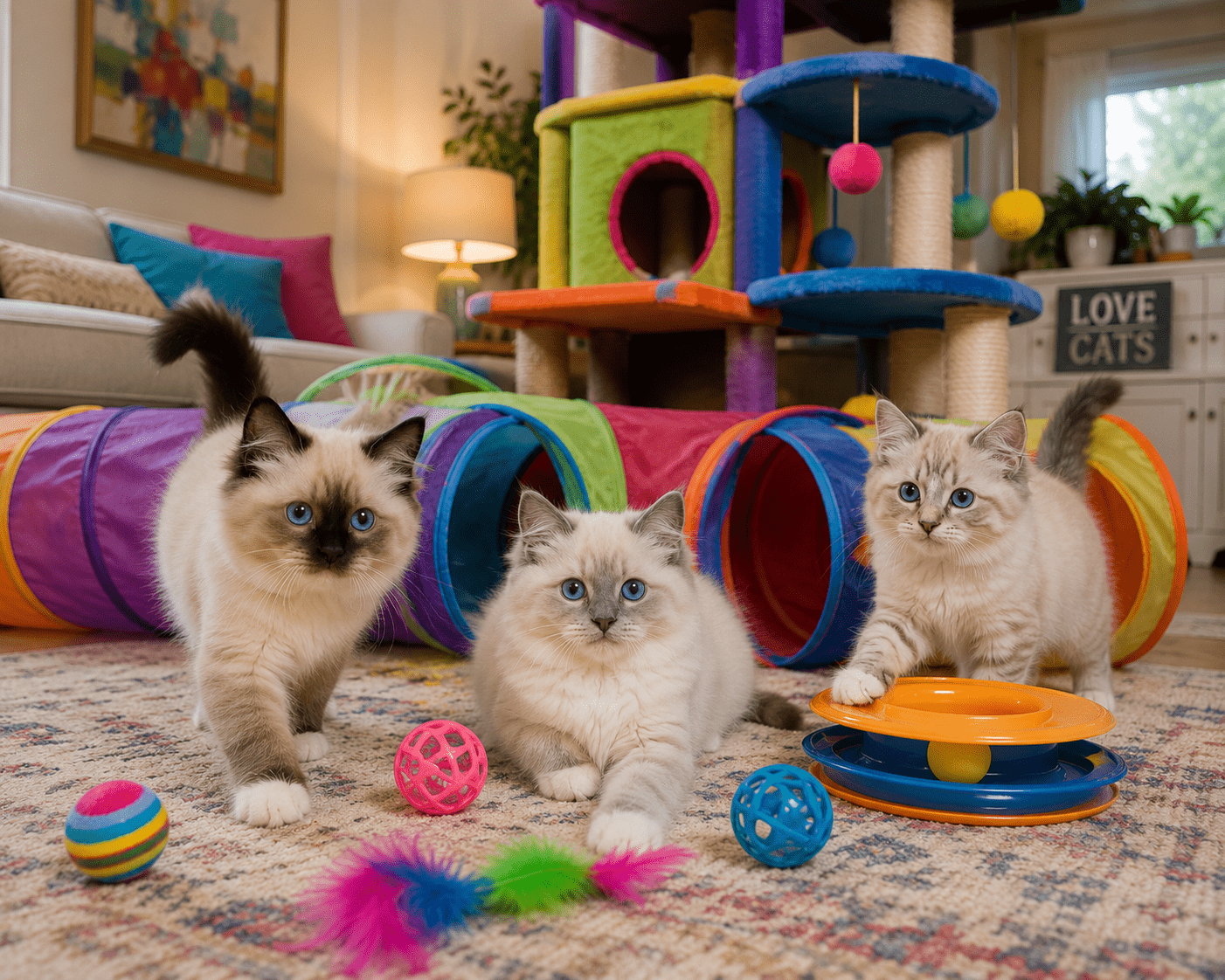

Persian Cat Colors: A First-Time Owner’s Guide
Persian cat colors can sound like a language of their own. A breeder may describe a kitten as blue, shaded silver, smoke, bicolor, or Himalayan, even when two kittens look surprisingly similar in a casual photograph.
The useful starting point is this: a Persian color name usually combines several details, including the base coat color, the pattern or distribution of color, and sometimes the presence of white or darker points. These labels help identify a kitten, but they do not predict personality, affection, grooming tolerance, or overall health.
This guide explains the common vocabulary in plain language so first-time owners can ask better questions and choose a kitten based on health and fit—not color alone.
Why Persian color names can be confusing
Cat registries organize colors in slightly different ways. The Cat Fanciers’ Association Persian standard, for example, groups recognized colors into divisions such as solid, silver and golden, smoke, tabby, particolor, bicolor, and Himalayan. Other registries may organize or name some colors differently.
That means a breeder’s description and a show standard may not use exactly the same wording. When comparing kittens, ask for the registered color or the color listed in the pedigree, then ask what the kitten looks like in everyday terms.
Persian cat colors at a glance
| Term | What you may see | What it does not mean |
|---|---|---|
| Solid | One main color from root to tip, such as black, white, blue, red, or cream. | It does not describe eye color or temperament. |
| Smoke | A darker outer coat with a pale or white undercoat visible when the cat moves or the fur is parted. | It is not simply a dirty or faded solid coat. |
| Shaded or chinchilla | Color is concentrated on the tips of the hairs, creating a pale overall appearance. | It is not the same as a white coat. |
| Tabby | Stripes, swirls, spots, or facial markings over a base color. | It is a pattern, not one specific color. |
| Bicolor or van | A combination of white and another color or pattern; van cats have color concentrated mainly on the head and tail. | The amount and placement of white can vary. |
| Particolor | Two or more non-white colors, such as tortoiseshell or blue-cream. | It does not automatically mean calico; calico includes substantial white. |
| Himalayan or colorpoint | A pale body with darker ears, mask, legs, and tail. | Point color and blue eyes are separate from a blue-gray coat. |
Common Persian coat-color terms explained
Solid colors
A solid Persian has one principal coat color with little or no visible pattern. Common examples include black, white, blue, red, and cream. In cat terminology, blue does not mean sky blue; it usually describes a soft blue-gray or slate-gray coat. Cream is a dilute, pale version of red and often looks warm ivory, buff, or apricot depending on the light.
Chocolate and lilac may also appear in Persian pedigrees or in color descriptions used by particular registries. If a label matters to you, confirm how the breeder’s registry defines it rather than relying on a casual color name.
Smoke coats
A smoke Persian can look nearly solid when resting. The contrast becomes easier to see when the kitten moves, stretches, or has its coat gently separated. The upper portion of each hair is colored, while much of the undercoat is pale or white.
Smoke kittens can look darker than expected during their early months. Ask the breeder to show photographs of the roots and the coat in natural daylight. A flash photograph or a heavily edited image can hide the pale undercoat.
Silver, golden, and shaded coats
Shaded coats have color concentrated toward the ends of the hairs, especially over the back, head, and sides. A chinchilla or shell pattern is lightly tipped and may appear almost white from a distance. A more heavily shaded coat shows more visible color over the body.
Silver and golden describe the underlying effect created by the contrast between the pale base and the darker tips. The same kitten may look very different under warm indoor lighting, direct sunlight, and a camera flash. Ask to see several unfiltered photos if you are comparing a pale silver or golden kitten.
Tabby patterns
Tabby describes markings rather than one base color. A Persian may have narrow stripes, broad swirls, spots, or a combination of markings. Terms such as silver tabby, blue tabby, and red tabby pair the pattern with the underlying color.
Facial markings are particularly helpful when identifying a kitten, but they can soften or become less obvious as the long coat grows. A kitten that looks strongly striped at eight weeks may appear more blended after its adult coat develops.
Bicolor, van, and particolor coats
Bicolor means white combined with another color or pattern. The colored patches may be fairly balanced or concentrated in particular areas. A van pattern generally has a mostly white body with color on the head and tail, although the exact standard depends on the registry.
Particolor refers to a mixture of two or more colors. Tortoiseshell coats combine black or a related dark color with red or cream. Blue-cream is the dilute version. Calico is commonly used for a particolor cat with significant areas of white, but formal definitions can vary.
Himalayan and colorpoint Persians
A colorpoint Persian has a pale body and darker color on the cooler areas of the body: the ears, face, legs, and tail. These darker areas are called points. The point color may be seal, blue, chocolate, lilac, red, cream, or another recognized variation.
Pointed coats can become more noticeably shaded with age. Temperature, genetics, and the individual cat all influence how strong the contrast becomes. A young kitten may therefore look much paler than the adult cat it will become.
Blue coat, blue eyes, and white fur are not the same thing
This is one of the most useful distinctions for a new owner. A blue Persian usually has a blue-gray coat and is not necessarily blue-eyed. In many non-pointed Persian color classes, copper or orange eyes are expected. Blue eyes are more commonly associated with colorpoint cats and some white cats, depending on the registry standard.
White fur is also not simply another word for a very pale cream coat. Genetic factors that create a white coat can mask the color beneath it. A white Persian may have blue eyes, copper eyes, or one eye of each color.
White cats with blue eyes have a higher risk of congenital deafness than white cats without blue eyes, but blue eyes do not prove that a cat is deaf, and not every white, blue-eyed cat is affected. Deafness can also affect one ear rather than both. The Merck Veterinary Manual explains deafness in cats and the connection with pigmentation.
If you are considering a white, blue-eyed kitten, ask whether hearing has been assessed and tell your veterinarian about the kitten’s coat and eye color. A simple home response test is not a substitute for a professional evaluation.
How a Persian kitten’s coat may change
Kitten photographs are useful, but they are not always a perfect preview of the adult coat. Long hair can hide the pattern at the roots, and lighting can make a warm cream coat look white or make a silver coat look gray. Smoke and shaded patterns may become easier to recognize as the coat grows.
Colorpoint kittens can also develop stronger contrast over time. Their ears, mask, legs, and tail may darken as they mature. Ask the breeder to show photographs of related adult cats when possible. The parents and older relatives can offer helpful context, although they cannot guarantee exactly how one kitten will look.
When viewing a kitten, look for photographs taken in natural light and ask whether the image has been filtered. A good breeder should be comfortable explaining the registered color, the parents’ colors, and what changes are reasonably expected.
Questions to ask before choosing a Persian kitten
Color vocabulary is most useful when it helps you communicate clearly. Before placing a deposit, ask:
- What is the kitten’s registered color and pattern?
- Which registry or breed standard is being used for that description?
- Can I see photographs of the coat in natural light, including the roots?
- How might this color or pattern change as the kitten matures?
- What are the parents’ registered colors, and can I see photographs of them as adults?
- If the kitten is white and blue-eyed, has hearing been assessed?
- What veterinary examinations, vaccinations, parasite treatments, and health screening have been completed?
- What grooming routine has the kitten already experienced?
Give the answers more weight than a stylish label. A responsible breeder should discuss health records, socialization, care requirements, and the kitten’s living conditions—not only how unusual the coat looks.
Color should never replace a health check
Persian kittens need the same careful evaluation regardless of coat color. Look for bright, comfortable eyes; clean nostrils; a coat free from heavy matting; normal energy for the kitten’s age; and a willingness to eat, play, and interact. Ask a veterinarian to examine the kitten soon after adoption.
Persians have long coats, so grooming is part of ordinary care rather than a special requirement for one color class. Most do best with gentle, regular combing that reaches through the coat to the skin. White fur may show tear staining more clearly, while dark fur may make loose hair or dandruff easier to notice. Those visual differences do not tell you whether one color is healthier.
Also separate coat vocabulary from facial structure. Terms such as flat-face, doll-face, or traditional face describe appearance or conformation, not color. If you are considering a very short-nosed Persian, discuss breathing, eye, dental, and grooming concerns with a veterinarian and choose a breeder who prioritizes functional health.
Frequently asked questions
What is the rarest Persian cat color?
There is no single answer because rarity depends on the registry, region, breeding program, and whether you mean a show-recognized color or an unusual individual combination. A rare label should not be treated as evidence of better quality or health.
Do Persian cat colors affect personality?
Coat color is not a reliable way to predict personality. Temperament is shaped by genetics, early socialization, handling, environment, and the individual cat. Meet the kitten and ask how it has been raised.
Are blue Persian cats blue-eyed?
Usually, no. In Persian terminology, blue commonly means a blue-gray coat. Blue eyes are more often associated with colorpoint or some white cats, while many solid blue Persians have copper or orange eyes.
Will a white Persian stay completely white?
A genetically white coat generally remains white, but the appearance can be affected by staining, dust, lighting, and grooming. A kitten that looks white may also be a very pale shaded or chinchilla cat, so ask for the registered color and photographs of the coat roots.
A practical way to read a breeder’s color description
Break the description into three questions: What is the base color? What pattern or distribution does the coat have? Where is the white or darker shading located? For example, silver tabby combines a silver base effect with tabby markings, while blue-cream bicolor combines dilute colors with white.
Once you understand those pieces, Persian cat colors become much less mysterious. Use the label to know what you are looking at, then focus your decision on the kitten’s health, behavior, breeder support, and the grooming routine your household can maintain.
Ready to explore available Persian kittens and learn more about bringing one home? Visit CTkittens.com for more information and next steps.
Sources and standards

Rachel Cohen is a journalist and producer with a passion for audio storytelling, health and science reporting, and feline companions.
A graduate of Middlebury College, Rachel spends her weekends exploring the mountains and when she isn’t outdoors or chasing a story, she can usually be found hanging out with her cats.