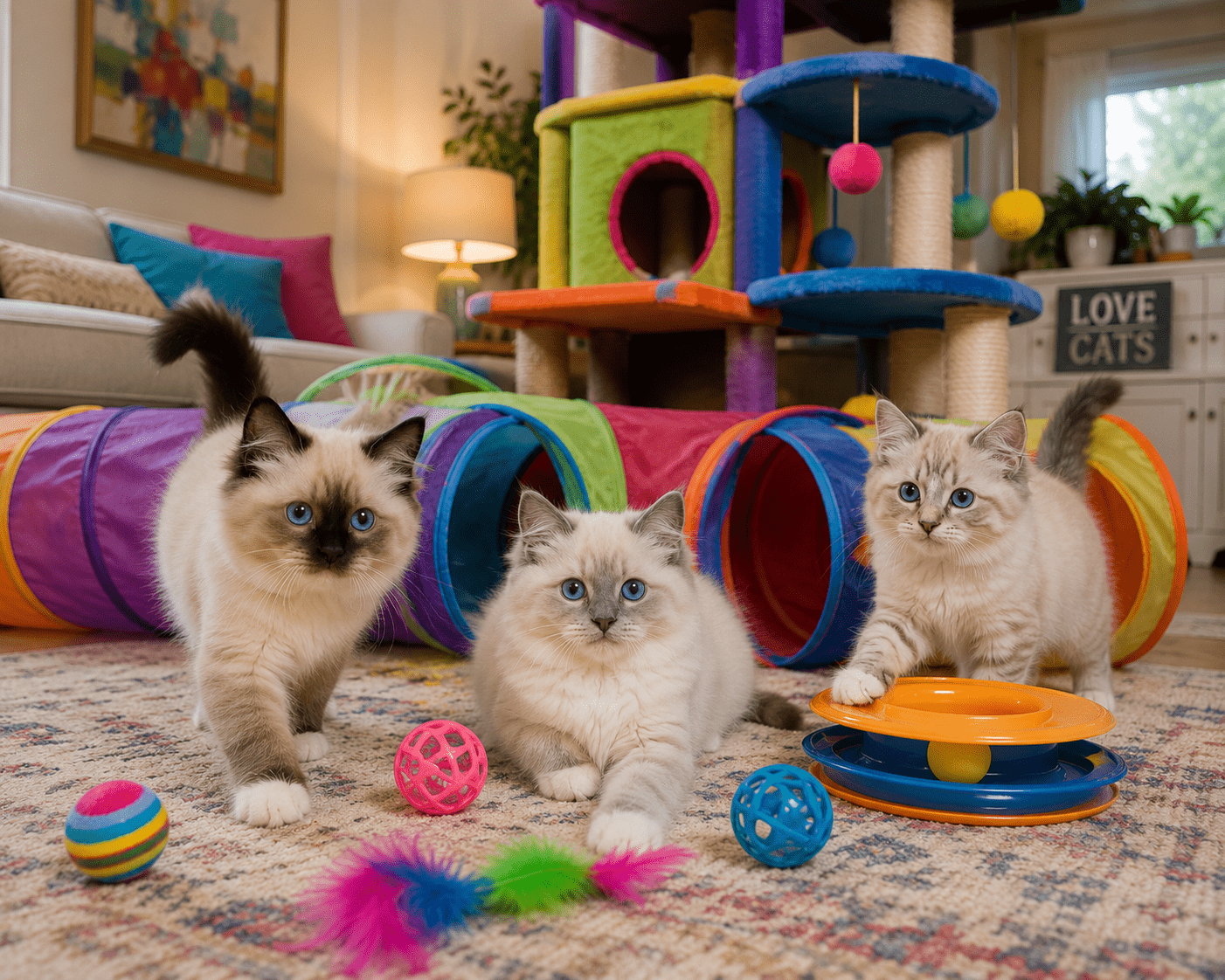

The Household Sound Map: Reading a Ragdoll Kitten’s Day by Ear
A Ragdoll kitten can turn an ordinary home into a surprisingly detailed soundscape. The click of a laptop key, the rattle of a cupboard, the hiss of a coffee machine, and the soft arrival of a visitor all become part of the day’s changing soundtrack.
Instead of treating household noise as background, try listening from your kitten’s point of view. A simple observation project called the Soundtrack Swap can show you which noises invite curiosity, which ones make your kitten pause, and where your kitten prefers to be when the house gets busy.
This is not a test your Ragdoll needs to pass. It is a way to notice patterns and arrange the home with more thought.
What Is the Soundtrack Swap?
For three or four days, keep a small note on your phone. Each time a notable household sound happens, record four details:
- The sound: kettle, doorbell, blender, shower, keyboard, laundry basket, music, or conversation.
- The location: where your Ragdoll kitten was when it happened.
- The response: watched, approached, paused, hid, continued sleeping, or moved to another room.
- The recovery spot: where your kitten settled afterward.
Do not create loud noises for the sake of the experiment. Simply observe sounds that occur naturally. If a noise seems startling, let your kitten choose distance. The most useful information often comes from what happens next: a kitten may look surprised, then calmly investigate the washing machine; another may decide that the hallway is no longer worth visiting while the vacuum is running.
Five Sound Clues Worth Noticing
1. The “approach after pause” sound
Some Ragdoll kittens freeze for a second when they hear an unfamiliar noise, then walk toward it with careful interest. The sound of a delivery box sliding across the floor may produce this exact sequence: ears forward, head tilted, one deliberate step, then a full inspection.
This response suggests that your kitten prefers to investigate from a controlled distance. You can support that habit by leaving a clear path to the source without placing the kitten directly beside it. A low stool, open doorway, or nearby blanket can provide a viewing station.
2. The “same sound, different room” clue
A noise may be acceptable in one part of the home and unwelcome in another. The dishwasher humming in the kitchen might be ignored, while the same appliance sound echoing through a narrow laundry area sends your kitten elsewhere.
Room shape matters. Hard floors, bare walls, and small spaces can make ordinary sounds feel sharper. If your kitten regularly leaves one room during a particular activity, look at the acoustics before assuming the activity itself is the issue. Adding a washable rug or keeping an interior door open may soften the experience without changing the household routine.
3. The “human voice anchor” clue
Many kittens pay attention to familiar voices during household activity. A Ragdoll may remain near your desk while you speak on a video call, even though the conversation is not directed at the kitten. Your voice becomes a steady reference point inside a more complicated sound environment.
Notice whether your kitten chooses proximity, a nearby doorway, or a distant perch. This can help you design a work-from-home location that allows companionship without requiring constant handling. A cushion beside the desk may be useful, but your kitten may prefer the cool floor under the chair or a spot just beyond the room.
4. The “predictable rhythm” clue
Repeated sounds are often easier to understand than sudden ones. The tap of a shower, the regular movement of a ceiling fan, or the quiet rhythm of typing may become part of your kitten’s daily map.
Watch for places your kitten selects during these routines. One Ragdoll might sleep through a morning of keyboard noise but relocate when a chair begins rolling across the floor. Another may follow the predictable sequence of your evening routine, appearing when the dishwasher starts and disappearing when the lights change.
5. The “sound plus movement” clue
Sometimes the movement attached to a sound matters more than the sound itself. A rustling paper bag is not especially interesting until it moves across the floor. A coat zipper may be ignored until you put the coat on and head toward the door.
This is where household sound observation becomes useful for understanding routines. Your kitten may not be reacting to the door closing; it may be reacting to the chain of events that precedes your departure. You can make those transitions less abrupt by moving calmly and leaving a familiar resting place available.
Build a Three-Point Listening Layout
Once you have noticed your kitten’s patterns, create three simple zones rather than one designated “quiet room.” The goal is choice.
- The observation point: a place with a view of household activity, such as a cat-safe perch, open doorway, or sturdy low platform.
- The soft-distance point: a bed or folded blanket far enough from busy sounds to feel separate, but not isolated from the household.
- The retreat point: a calm, accessible area where your kitten can pause without being followed or coaxed out.
These locations do not need to be expensive or elaborate. A Ragdoll kitten may ignore a carefully arranged cushion and settle beside the bookcase because that spot offers the perfect combination of distance, warmth, and a view of your feet.
Keep pathways clear. A sound-friendly layout is not about forcing your kitten to stay in one zone. It is about making movement between zones easy.
A Small Weekend Experiment: Change One Variable
Choose one regular household sound and alter only its surroundings for a weekend. For example, place a rug near the kitchen doorway, move a rattling basket away from a hallway, or keep a door open so sound can travel less abruptly.
Then observe three things:
- Does your kitten remain in the area longer?
- Does the kitten watch the activity from a different distance?
- Does the kitten return more quickly after the sound ends?
This is not a scientific measurement, and one weekend cannot define a personality. Still, small environmental changes can reveal what your kitten values: a clear escape route, a stable surface, visual contact with you, or a little more space around a noisy object.
Persian vs. Ragdoll Kittens: Different Listening Styles
In relation to household sounds, Persian kittens may appear more selective about busy pathways and abrupt activity, often favoring a settled observation spot where they can watch without joining every event. A Ragdoll kitten may be more inclined to remain near a person during ordinary household routines, especially when the person’s voice and movement are familiar.
These are tendencies, not rules. A Persian may investigate every new package, while a Ragdoll may prefer the quietest corner in the house. Use the individual kitten’s chosen distance and recovery spot as your guide.
What the Sound Map Can Teach You
After several days, you may discover that your kitten is not “sensitive to noise” in a broad, mysterious way. The preference may be much more specific. Perhaps the kitten dislikes sounds that happen behind its back, but enjoys watching noises it can see. Perhaps the real issue is a slippery floor near the washing machine. Perhaps your kitten simply wants to stay connected to you while retaining the option to leave.
Those details are valuable because they turn vague impressions into practical design choices. You can place resting spots near, but not inside, busy areas. You can give visitors a quieter route through the home. You can move noisy objects away from narrow passages. You can notice when your kitten is curious and when it is asking for distance.
The next time your Ragdoll kitten pauses at the sound of a cupboard closing, listen before reacting. A tilted head, a relaxed return to sleep, or a careful approach each tells a different small story about how your shared home is being experienced.
For more thoughtful ideas about living with Persian and Ragdoll kittens, explore the breed-focused articles at CTkittens.com.

Rachel Cohen is a journalist and producer with a passion for audio storytelling, health and science reporting, and feline companions.
A graduate of Middlebury College, Rachel spends her weekends exploring the mountains and when she isn’t outdoors or chasing a story, she can usually be found hanging out with her cats.