

How to Read Persian Kitten Behavior Without Guessing
Persian kittens are often described as gentle, quiet, and affectionate, but those broad labels do not always help an owner understand what is happening in the moment. A kitten may sit near you without climbing into your lap, look away during petting, or follow you silently from room to room. None of those behaviors has a single guaranteed meaning.
Understanding Persian kitten behavior is less about waiting for a dramatic meow or an obvious cuddle and more about noticing small patterns. Their rounded facial features, compact posture, and often-luxurious coat can make subtle signals easy to overlook. In a busy home, especially one where people work, study, or move around frequently, learning to pause and observe can make your relationship feel much more natural.
Why Persian kitten behavior can be easy to misread
Many Persians communicate in a low-key way. Some kittens use a soft chirp, a brief look, or simple physical proximity instead of demanding attention. A kitten that settles on the same sofa but leaves a small gap may be choosing companionship while still preserving control over contact.
Their appearance can also distract humans from useful clues. A round face may make an attentive expression look unusually intense, while a full coat can make changes in the outline of the body or tail less obvious. It helps to read several signals together rather than deciding what one stare, ear position, or tail movement means on its own.
Look beyond the face
Persian kittens have expressive faces, but the face is only one part of the conversation. Watch the entire body, especially when your kitten is deciding whether to continue an interaction.
- Eyes: Soft eyes, relaxed blinking, and a gaze that breaks easily often suggest comfort. A fixed stare combined with a tense body deserves more space, even if the kitten is not vocalizing.
- Ears: Ears that remain generally forward or gently rotate toward household sounds show active attention. Rapid swiveling can mean your kitten is monitoring too much at once.
- Whiskers and muzzle: Whiskers held naturally to the sides are different from whiskers pushed forward in focused interest or pulled tightly back during unease. The important clue is the change from your kitten’s usual resting position.
- Paws: A paw placed lightly on your hand may be a request to adjust the interaction, not necessarily an invitation for more touching. If the kitten presses away, freezes, or repeatedly repositions, pause.
- Distance: Choosing to remain in the same room is meaningful social behavior, even when your Persian kitten is not seeking physical contact.
One especially useful observation is the difference between relaxed stillness and tolerant stillness. A relaxed kitten may lean into your hand, shift comfortably, or return for another touch. A kitten that is merely tolerating handling may become very motionless while keeping its paws ready to move. Quiet does not always mean content.
Three ordinary moments that reveal a lot
When you enter the room
A Persian kitten may not rush to the doorway. Instead, it might look up, blink, and remain nearby. Try not to measure affection only by speed or enthusiasm. Some kittens prefer to observe your arrival before deciding whether to approach. If your kitten gradually moves closer after you sit down, that delayed approach is still a social choice.
In a home office or apartment where people come and go, this pattern can be easy to miss. The kitten may quietly relocate from a cushion to the edge of the room, keeping you within sight without interrupting what you are doing.
When petting suddenly stops working
A kitten that once enjoyed cheek strokes may turn its head away after several seconds. This does not automatically mean the kitten dislikes you or has changed personality. It may simply be finished with that type of touch. Turning the head, lowering the body, or placing a paw between you and the hand can be a polite request for a pause.
Try stopping before the kitten has to escalate the message. Over time, your Persian kitten can learn that small signals are effective, and you can learn the length and location of contact that the individual kitten prefers.
When the kitten leaves after play or attention
Walking away after an enjoyable interaction is not necessarily rejection. Kittens often need a short period to settle, groom themselves, investigate another sound, or regain a sense of control. A Persian kitten may be especially likely to shift from active engagement to quiet observation rather than remaining visibly energetic.
The useful question is not, “Why did my kitten abandon me?” It is, “What usually happens next?” If the kitten returns later, rests nearby, or initiates contact in another form, the earlier departure was probably part of a normal rhythm rather than a negative verdict on the relationship.
How to respond without over-intervening
Owners sometimes try to clarify every behavior by immediately picking up the kitten, offering more petting, or calling repeatedly. For a reserved Persian kitten, that can create more noise around an already subtle conversation. Observation is often the more helpful response.
- Approach from the side or front at a comfortable pace rather than reaching suddenly from above.
- Offer a hand low and still, then let the kitten decide whether to close the distance.
- Use short, predictable interactions and stop while the body still looks loose and comfortable.
- Notice whether your kitten prefers contact on the cheeks, shoulders, chest, or nowhere at that moment.
- Keep a mental note of patterns across morning, afternoon, and evening instead of judging a single unusual moment.
This does not mean being passive or ignoring your kitten. It means allowing communication to work in both directions. A Persian kitten that discovers its quiet signals are respected may become more confident about approaching, asking for attention, and setting boundaries.
Persian vs. Ragdoll kittens: reading affection in this situation
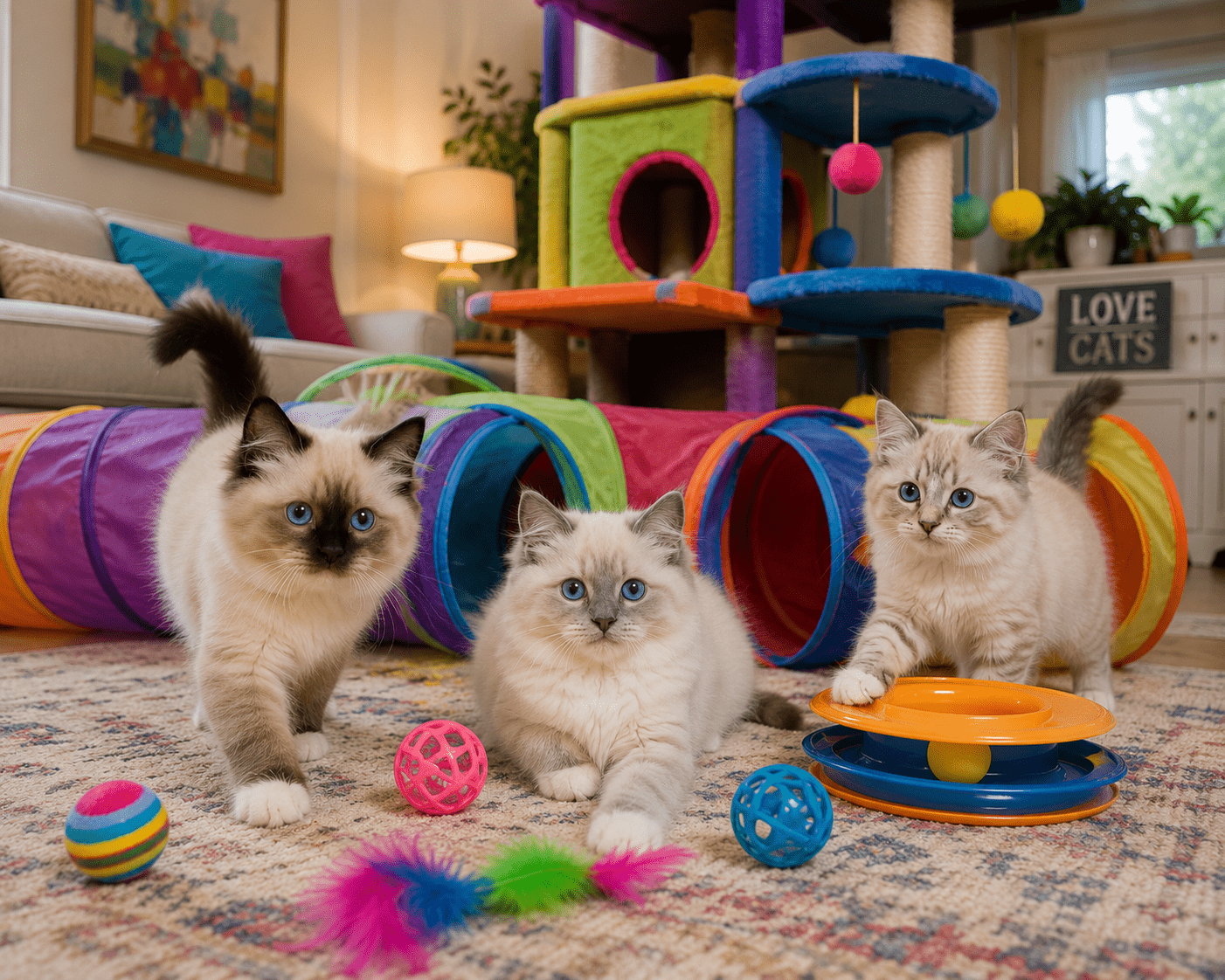
In the context of subtle communication, Persian and Ragdoll kittens can give owners different impressions. Many Persians are content to express attachment through nearby resting, soft vocalizations, brief contact, and calm observation. Their compact posture and facial structure can make those cues easy to underestimate. Many Ragdolls, by comparison, are more physically demonstrative, with a tendency in some individuals to follow people, stretch out beside them, or remain relaxed during handling. That does not make every Ragdoll more affectionate or every Persian more reserved. Individual personality, early socialization, and the home environment matter greatly. The practical difference is simply that a Persian owner may need to notice quiet proximity, while a Ragdoll owner may more often notice affection through physical participation.
A better question than “Is my Persian kitten affectionate?”
Ask instead: “How does this particular kitten choose to be close?” One Persian may want a lap for five minutes and then prefer the floor beside your chair. Another may greet you with a tiny sound but dislike being carried. A third may show trust by sleeping openly in the same room while remaining independent during the day.
These preferences are not obstacles to overcome. They are information. Once you learn your kitten’s ordinary signals, small changes become easier to notice, and everyday interactions require less guessing. You may discover that the kitten who seemed aloof was actually communicating constantly—just in a quieter voice.
For more thoughtful breed guidance, kitten-care ideas, and life with Persian and Ragdoll cats, explore the other articles at CTkittens.com.

Rachel Cohen is a journalist and producer with a passion for audio storytelling, health and science reporting, and feline companions.
A graduate of Middlebury College, Rachel spends her weekends exploring the mountains and when she isn’t outdoors or chasing a story, she can usually be found hanging out with her cats.

The distinction between relaxed stillness and tolerant stillness is especially useful. That small observation could help owners stop petting before a kitten feels compelled to swat or retreat.
The distinction between relaxed stillness and tolerant stillness is especially useful. That small observation could help owners avoid mistaking a quiet kitten’s patience for enjoyment.